






Milos: Our Guide
14th May 2026
Your Insider’s Guide to Slow Island Life
Milos may have earned its place among the most photographed islands in Greece, but reducing it to that would miss the point entirely. The island has never conformed to the postcard. The landscape is volcanic and strange, surreal coastlines shaped by forces that had no audience in mind, secluded coves, sea caves that echo. There is a rhythm to the place that feels both wild and deliberate. And between all of it, fishing villages painted in colors that have no business being that vivid.
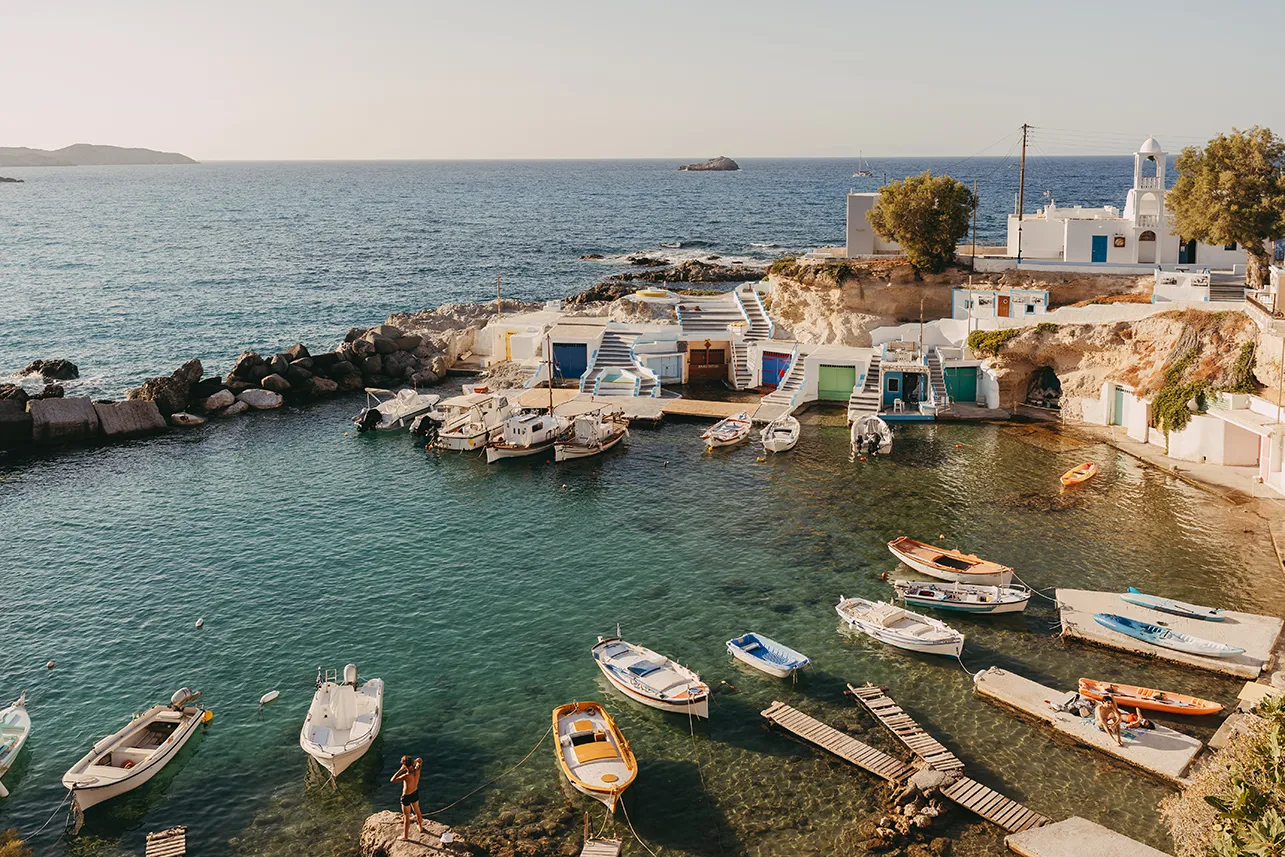
The first thing that drew me to Milos was its fishing villages, with their colorful syrmata, fishermen’s boat garages etched into the coastline in pinks, turquoise, and rust, before I had even set foot on the beaches. And while the iconic moon-like landscapes and crystalline waters are everything they promise to be, the lasting memory is the sense of seclusion, a feeling of being in on the secret.
Milos has changed over the past few years. It now welcomes design-focused accommodations, elevated dining options, and a growing number of travelers looking for more than the standard fare. Despite that, Milos remains genuine. Mornings are spent barefoot, golden-hour rituals are non-negotiable, and each day feels like you have it all to yourself.
Where to stay
Where you stay on Milos shapes everything. This is not an island of large-scale resorts or overly polished luxury, but one where the environment speaks for itself. Expect sea-facing terraces, weathered limestone, and buildings that feel as though they were built into the land rather than placed upon it.
The property that put Milos on the map for a certain kind of traveler is Skinopi Lodge: seven stone villas above the Bay of Milos, each named after a herb that grows nearby. No pool; the sea is directly below, reached by steps cut into the rock. Simple in the way that things are when someone has thought very carefully about what to leave out.
For those looking to be near Pollonia, the Milos Breeze Boutique Hotel and Casa Litore are well-placed for exploring the north of the island. Milos Breeze sits at the top of a hill, its whitewashed Cycladic architecture commanding wide views over the Aegean from most rooms. The pool, perched at that elevation, is the kind of spot you find yourself returning to throughout the day. Casa Litore is more intimate: a private rooftop terrace, a jacuzzi, and sea views that make leaving feel optional.
Also worth knowing is Domes White Coast Milos, an adults-only property built into the island’s volcanic cliffside on the southwest coast. Private pool suites, unobstructed sunset views, and a MICHELIN-starred restaurant that gives the setting serious culinary weight.
A new addition opening in June 2026 is Eréma, a Design Hotels member on the southeastern coast. Each of their 41 suites is equipped with a private pool and Aegean views. A design-led escape centered on space and light, on a stretch of the island that still feels undiscovered. One to watch.
For those who prefer something more intimate and rooted in the island’s character, staying in a traditional syrma, especially in villages like Firopotamos or Mandrakia, is a must. Waking up quite literally on the water, in one of these restored fishermen’s houses, is one of those rare experiences only truly found in Milos.
Best Milos Beaches
- Sarakiniko
- Tsigrado Beach
- Firiplaka Beach
- Kleftiko
- Plathiena
- Firopotamos Beach

Where to swim
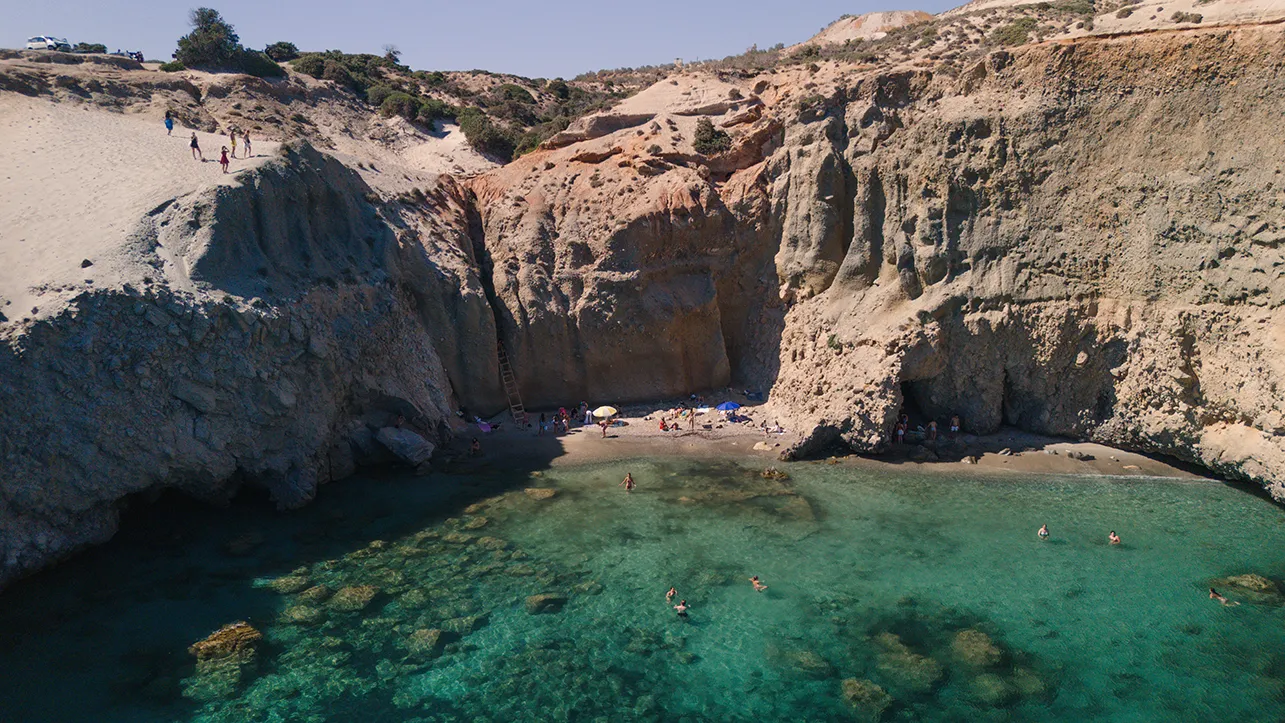
The volcanic geology of Milos has been producing coves, rock formations, and an impossible coastline for centuries, and it shows no sign of stopping. Some beaches are a short walk from the main villages. Others are boat-only. A few require a rope ladder and a willingness to commit. Get out early to beat the crowds, and keep an eye on the wind: it shifts the experience of each beach entirely. These are the ones worth building your days around.
Sarakiniko
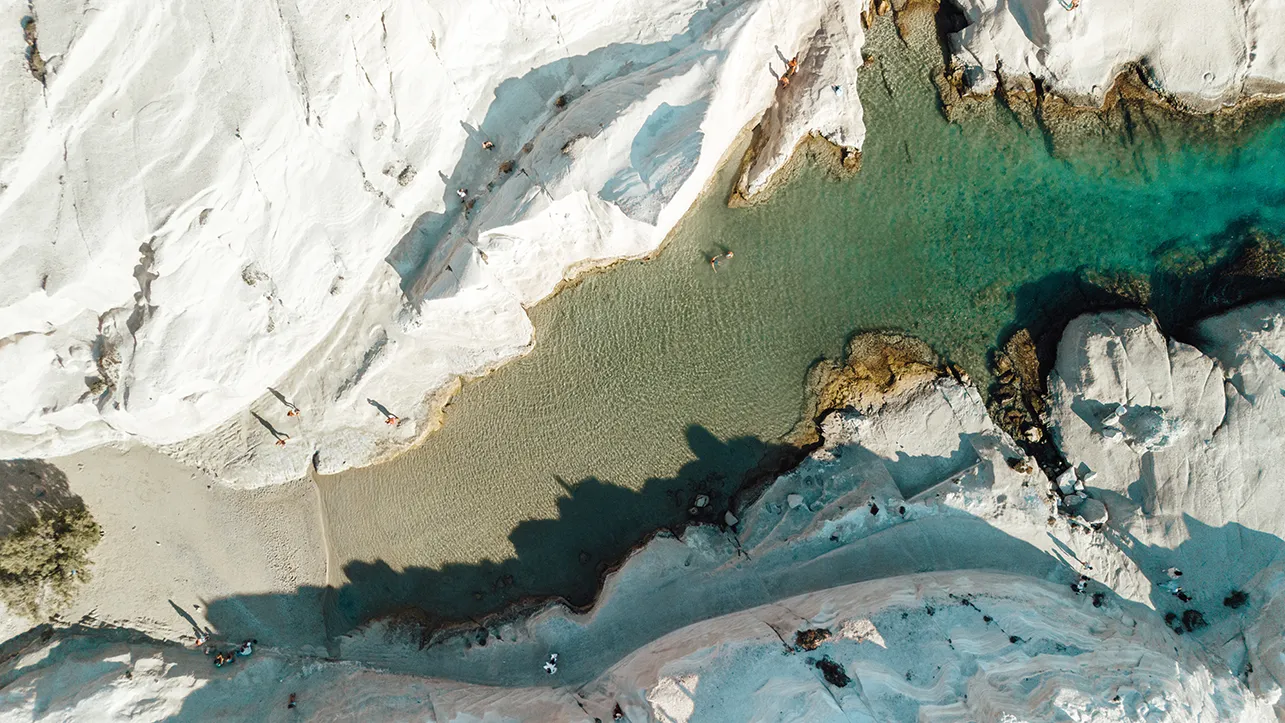
Gleaming white volcanic rocks that emerge unevenly from the sea, as if naturally sculpted into an oceanic quarry. The “moon beach” is Milos at its most iconic, and everyone knows it. Make your way before 9 AM or arrive just before sunset. The more adventurous are welcome to cliff-dive. Pack water, shoes; you’ll want them on the rock.
Tsigrado Beach
Tsigrado is a cove you have to earn. By boat is the straightforward option. By land, you’re looking at a steep descent involving ropes and ladders; bring only the essentials in a backpack, because you’ll need both hands. Worth it. Pairs well with Firiplaka on the same afternoon.
Firiplaka Beach
Firiplaka sits between volcanic cliffs and turquoise water on the southern coast. Wide, sandy, and easy to reach. A beach bar to the right for refreshments; head to the far left if you want a quieter stretch.
Kleftiko
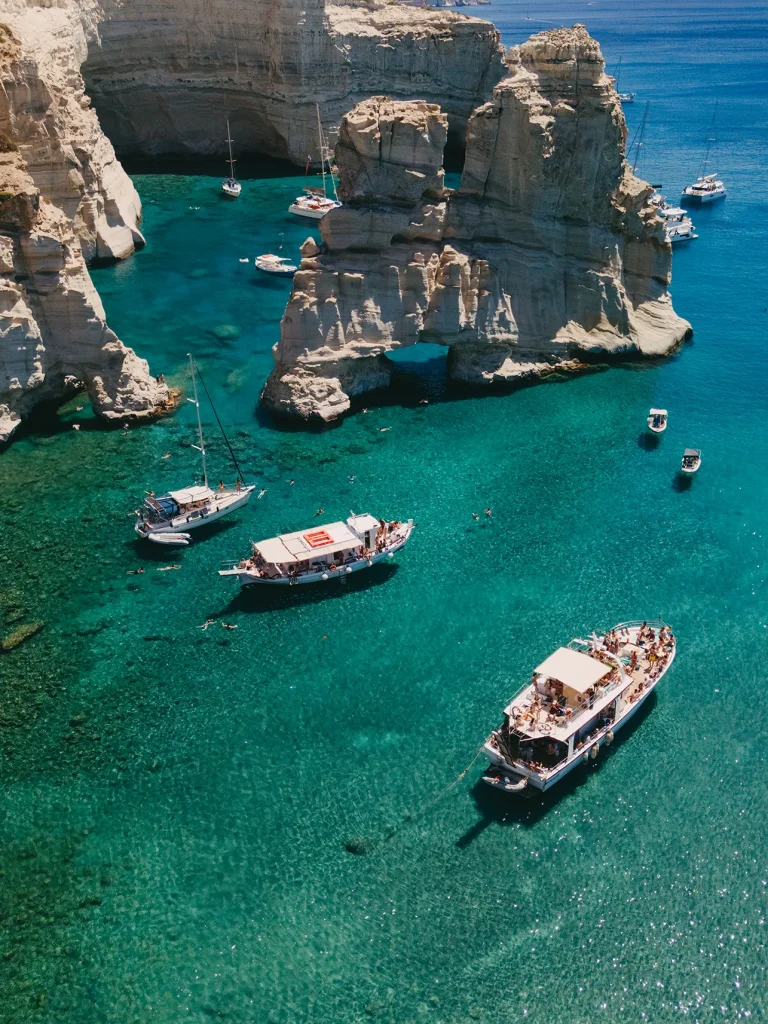
Once a pirate hideout, Kleftiko is a calm bay of jagged white rock and water so clear it glows. Swim through the caves and hear your voice echo off the walls. Only accessible by boat, but most tours anchor briefly at other beaches on the way, so the trip itself is part of the draw.
Plathiena
Plathiena shows a softer, more underrated side of Milos. Golden sand, shallow waters, and a gentler pace altogether. Come for a late afternoon swim, when the light is at its best. Grab something cold from the beach bar and settle in. This is one of those places you end up staying longer than planned.
Firopotamos Beach
Firopotamos is the one that looks like a postcard. Colorful syrmata along the shore, crystal-clear water, and a cove that feels like your own. Arrive early in the morning to save a spot under the tamarisk tree’s shade.
Where to Eat
Unplanned Morning Nibbles, Long Lunches & Sunset Tables
Travelers come to Milos for the famous landscapes but quickly learn there’s more to the island than the beaches. From morning pastries at local bakeries to long seaside lunches to sunset views at the dinner table, there is no haste in Milos. The food has always been good here. Lately, it’s gotten serious. Rather than following a list, it helps to think of the island in moments: where you start your morning, where you stretch for lunch, and where you end the day.
Morning & Casual Stops
Kivotos Ton Gefseon is an old-school bakery on the road just before Pollonia, with local pastries and savory pies straight from the oven. The cheese pie, still warm and slightly crisp at the edges, is the cornerstone of a traditional Greek breakfast. Stop here early once, and you’ll likely return every day. Additionally, grab a couple of traditional karpouzopita slices with you, a local delicacy, and savor them after a swim to combat the saltiness.
In Plaka, Café Paleos fits naturally into the rhythm of a slower morning or even an afternoon pause, especially if your day starts or ends in the village. Other than their excellent salty choices like the ladenia pie, opt for a syrupy galaktoboureko to accompany your coffee.
When meandering the cycladic alleys of Plaka, you’ll eventually stumble upon Verina. A quaint, sunny corner that serves the most savory eggs on brioches, and Greek yogurt or mascarpone french toast topped with fresh fruit; simple, well-executed, and consistent.
Long Lunches by the Sea
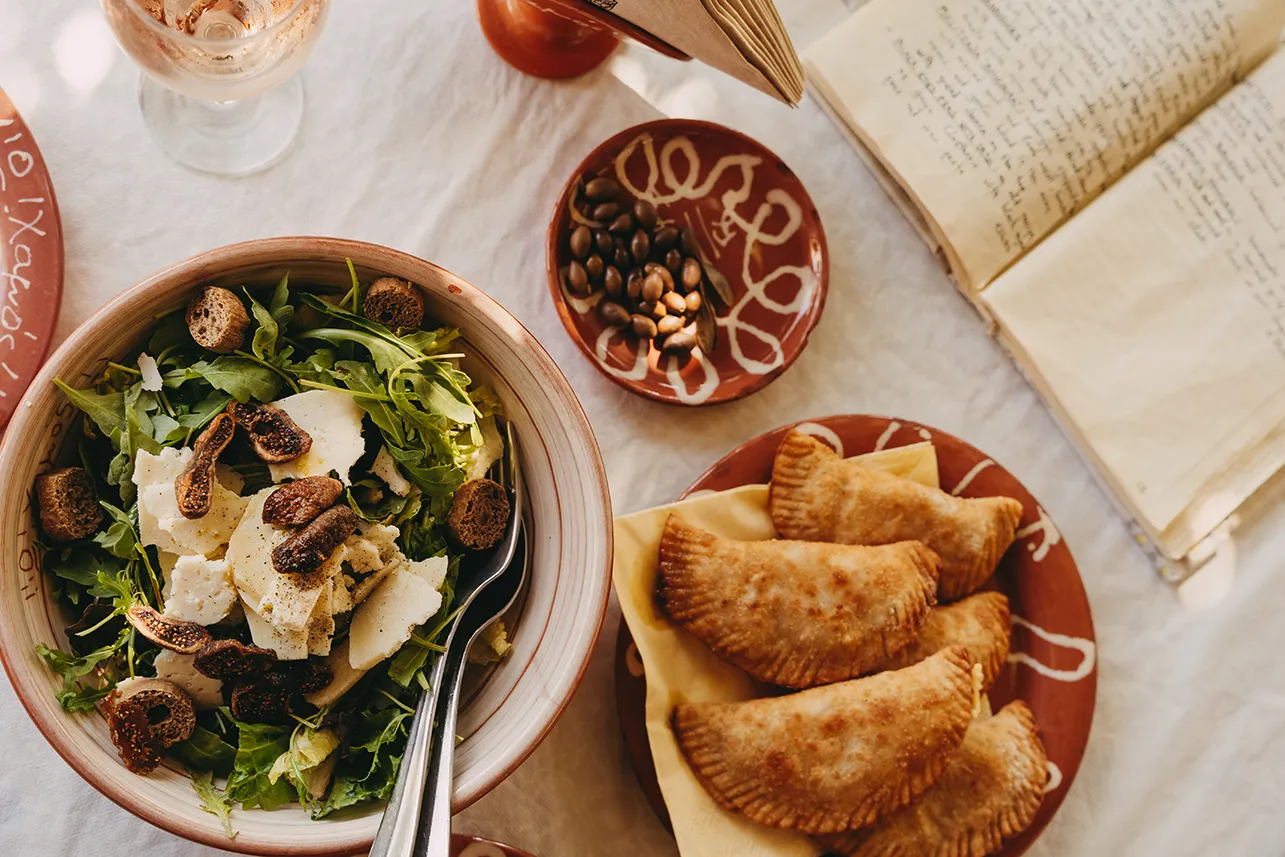
Medusa, in the fishing village of Mandrakia, sits right on the water. No reservations—arrive early and settle in for freshly caught seafood. The grilled octopus, charred just enough, pairs splendidly with the fried zucchini, washed down with sips of a crispy white.
Yialos, on Pollonia’s harbor, is the right call for a relaxed lunch with a view. Start with red mullets, and follow with the seabream, which is to die for. Notably, the cuttlefish orzo pasta tastes best at Yialos, where the turquoise water laps at the edge of your table.
At a more classic approach, Nama, also in Pollonia, brings you even closer to the water, with tables on the sand and a pace that encourages you to stay. The baked aubergine, and the fried calamari in tandem with the fresh catch-of-the-day make for a deeply palatable affair.
Mezze Milos leans more traditional, ideal for a slow lunch that gradually turns into early evening. Indulge in pre-appetizing spreads; take a plunge in a farm-to-table Greek salad. Cheesy croquette bites and watered-down iced tsipouro (grape brandy). This is the way to go.
O! Hamos! stands slightly apart from categories, a local favorite with authentic Cycladic flavors. The slow-cooked lamb and the rotating small plates are the reasons people are willing to wait. In high season, forget reservations and welcome the wait; it’s part of the charm. Go for a selection of small plates paired with their lamb chops and house wine.
Dinner & Sunset Spots
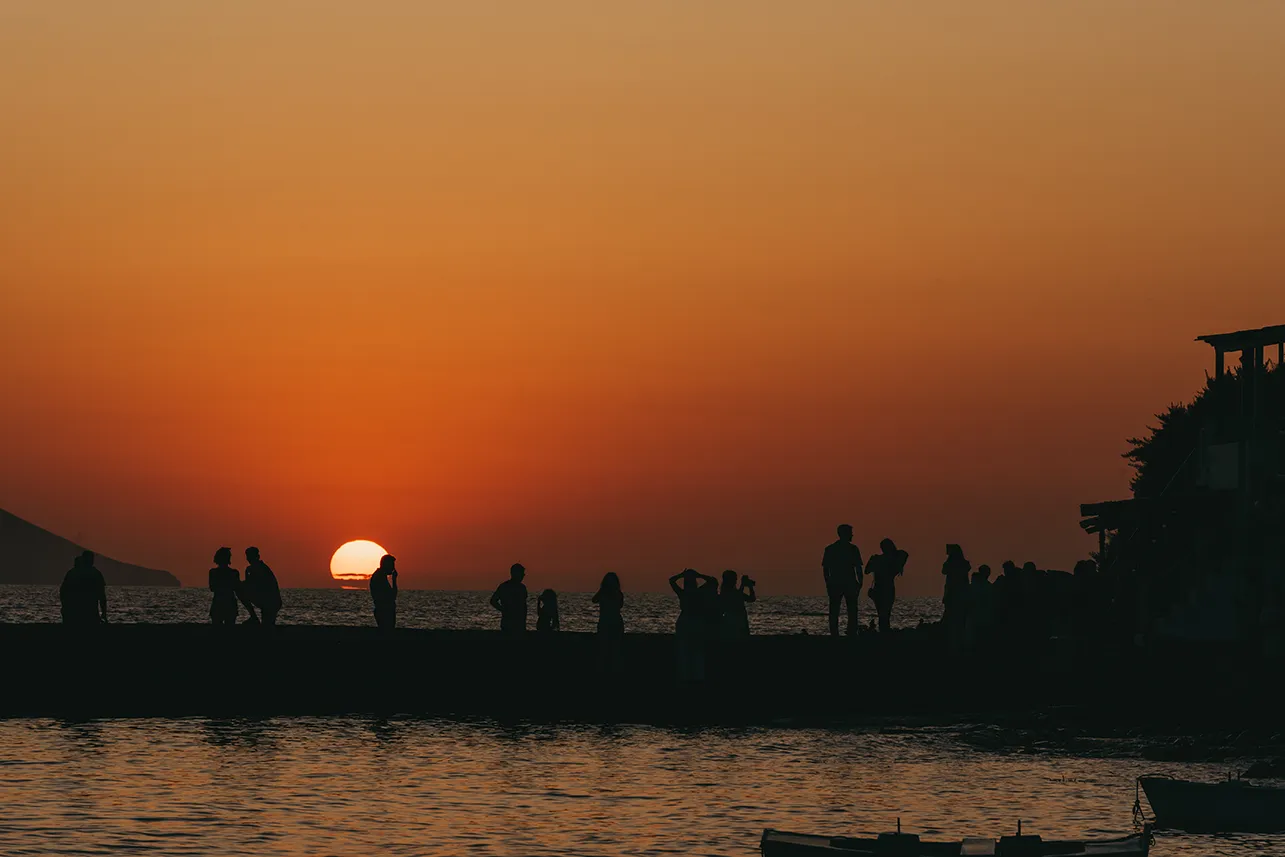
Astakas catches the last light so beautifully. Even just a glass of wine here, as the glow fades over the fishing village of Klima, feels like a complete experience on its own. Admittedly, the grilled fish and lobster pasta are worth staying for. Just make sure to reserve before the light changes.
OKTO is a strong alternative when Plaka’s main square feels crowded, offering a more refined but still relaxed setting for a long lunch or early dinner. Modern, sun-filled setting with proper Mediterranean cooking and a calmer pace. Sample their sea bass carpaccio over a local variety of cheeses, amply, ending your day with a chocolate mousse gazing at the sky’s epilogue.
Kyra is where the evening shifts gears in Plaka—lively, social, and easy, with cocktails and pizza. There’s naught to argue about the pineapple-pizza dispute; their signature honey & basil pineapple cocktail is surely exciting over a buffalo mozzarella pie.
At Utopia Café in Plaka, the appeal is the ambience as much as the drinks. An elevated spot for cocktails with wide views over the island, especially at sunset when the light settles over the coast. Fruity, signature cocktails like the Volcanic Kiss or the Dusk Blues draw inspiration and exonerate the setting with their satiating taste.
Join Bariello as the day winds down. Right in the heart of Tripiti, above the old port, it offers one of the better sunset views on the island. Have a go at their take on frutti di mare with a side of mushroom carpaccio, and a signature bougatsa ice cream for a grand finale. It’s popular, so book ahead and arrive early if the view matters.
Exploring the Island
What To Do Between Swims
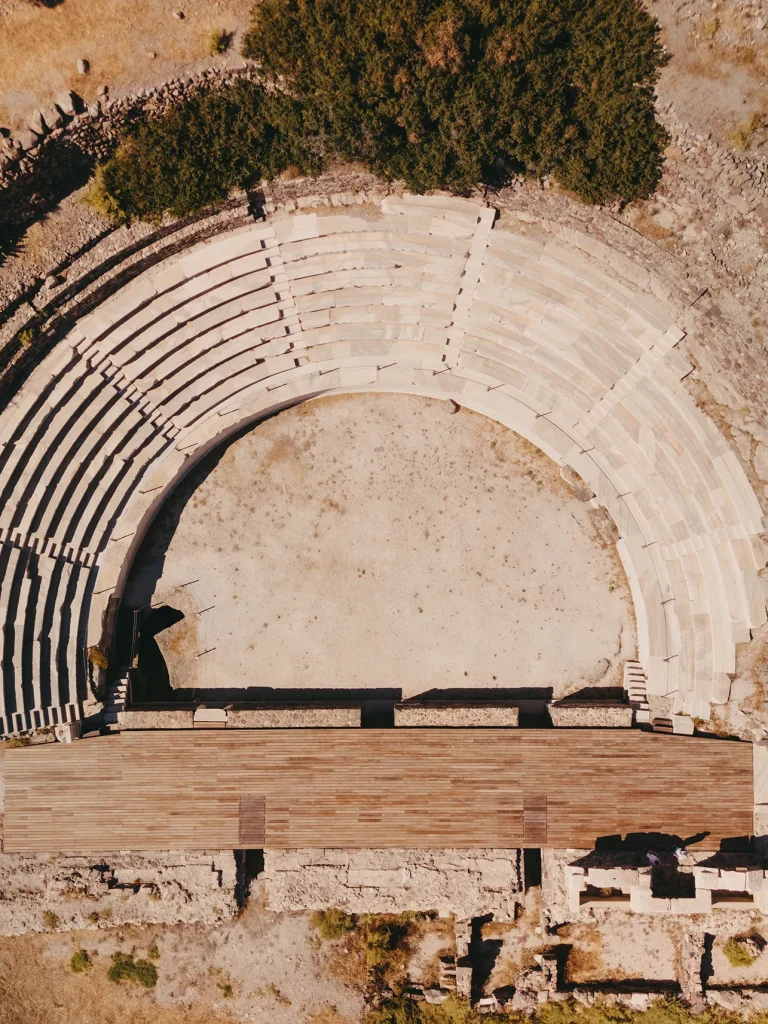
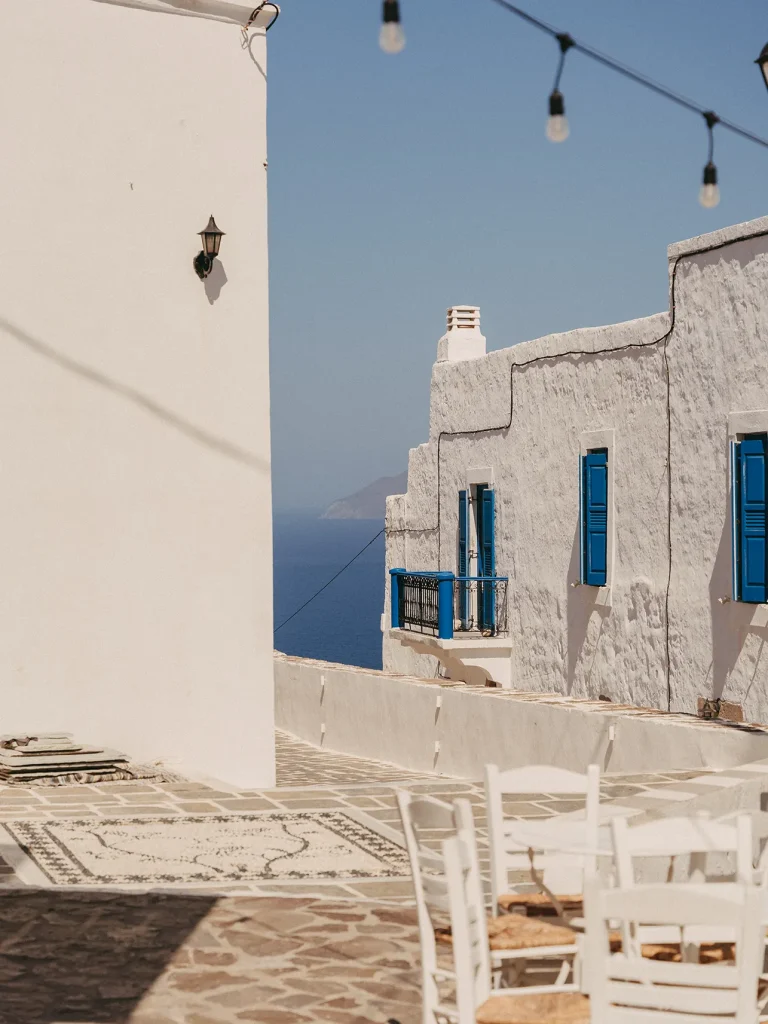
Milos is best experienced without a plan. Wander through the whitewashed alleys of Plaka, find a café in Pollonia, or head to Trypiti to stand where the Statue of Aphrodite of Milos was unearthed in 1820, then make your way to the nearby Catacombs and Ancient Theater.
A short drive along the volcanic coastline reveals rough cliffs, dusty roads that meet the sea, and coves you wouldn’t find without looking for them. For a step back into the island’s industrial history, visit the Old Sulfur Mines and the Mining Museum. Smaller boat trips lead to sea caves beyond Kleftiko, while the hiking trails above the cliffs reward you with quiet sunsets.
Hiking in Milos tends to be informal rather than structured, but that’s part of its appeal. Trails often follow old paths between beaches and villages, with rewarding views rather than clearly marked routes. Paths unfold between places like Fyriplaka and Tsigrado, where the coastline shifts from sheer cliffs to open sand. A trail in the southwest of Milos leads to a viewpoint overlooking the so-called “Sea Meteora” and the caves of Kleftiko. Venture from village to village, or slope southwest toward the hillside where the Catacombs of Milos and the Ancient Theatre lie. The path continues up to the chapel of Profitis Ilias before looping back to the village along a slightly different track. Good shoes, plentiful water, and a loose sense of direction go a long way—especially along the southern coastline.
For a change of pace, take a day trip to Kimolos, Milos’s quieter neighbor, with its main village, Chorio, volcanic beaches, and a peaceful pace. It’s a world away from the more visited corners of the Cyclades. A few hours there will make you wish you’d planned to stay the night.
Fishing Villages to Wander
Once home to fishermen with boat garages, the fishing villages of Milos hold the island’s history. No two are alike. Take your time exploring them, letting the colors, the water, and the quiet streets guide you.
Mandrakia
A small, colorful village with iconic syrmata and intimate coves. Go for a stroll or a swim stop, or both.
Klima
Famous for its soft pastel fishermen’s houses right on the water, Klima feels almost frozen in time. Worth visiting just before sunset, when the light does something to the facades and the sea that photographs can’t quite capture.
Agios Konstantinos
Quiet and unassuming, this tiny village is where you come to soak in the stillness. The absence of anything on the agenda is entirely the point.
Firopotamos
Postcard-perfect with emerald waters and traditional syrmata. Arrive early to enjoy the calm, and wander the village or climb to the little hilltop church for the view.
Skinopi
Smaller and more understated, Skinopi is easy to miss, and that’s exactly why it works. A handful of syrmata, calm waters, and a slower rhythm tie in naturally with the island’s more private, lived-in side.
Flow of the Island
How to get to Milos
Ferry: Regular connections from Piraeus (2.5 to 3.5 hours) and nearby islands. Opt for early departures to make the most of your first day.
Plane: Small domestic flights from Athens International Airport land at Milos Island National Airport in under an hour.
Helicopter: Private charters offer remarkable aerial views of the coastline on approach.
Getting Around
Car or ATV rental: Essential for reaching the beaches, volcanic cliffs, and remote villages.
Boat trips on private or semi-private hire: RIB or sailing boats depart daily for Kleftiko (accessible only by water), sea caves, and isolated coves.
Tip: Early departures mean calmer waters and fewer boats.
Walking: Short strolls around Plaka, Pollonia, and the fishing villages reveal tucked-away terraces and viewpoints.
Length of Stay & Best Season
Ideal stay: 4 to 5 days allows time to explore beaches, villages, and hidden corners without rushing.
Best season: May to June or September, when the seas are warm, crowds are fewer, and the island is at its most relaxed.
Ami is a Thessaloniki-based photographer whose visual guide, Urban Wanders, follows her eye across Greece, from hotels to hidden corners of the city she calls home. Her photography work spans hotels and travel brands across the country.
Instagram: @urban_wanders