






Greek Islands You’ve Never Heard Of – Part 2
Must visit off-the-grid Greek islands – Part II
Most people, asked to picture a Greek island, see the same thing: a whitewashed village on a cliff, cobbled lanes, bougainvillea, the Aegean somewhere blue and below. The picture is real, and it covers maybe a third of the country.
The other two thirds look nothing like it. They have forests that run down to the sea, mountain villages with their own dialects, sandy beaches that stretch for kilometres, olive groves and pine and chestnut, even marble. These are the greener, wilder islands, scattered from the Ionian to the northern Aegean and still well off the usual routes. Their bare, sun-bleached counterparts have a piece of their own; here, Greece turns to forest and pasture and pine.
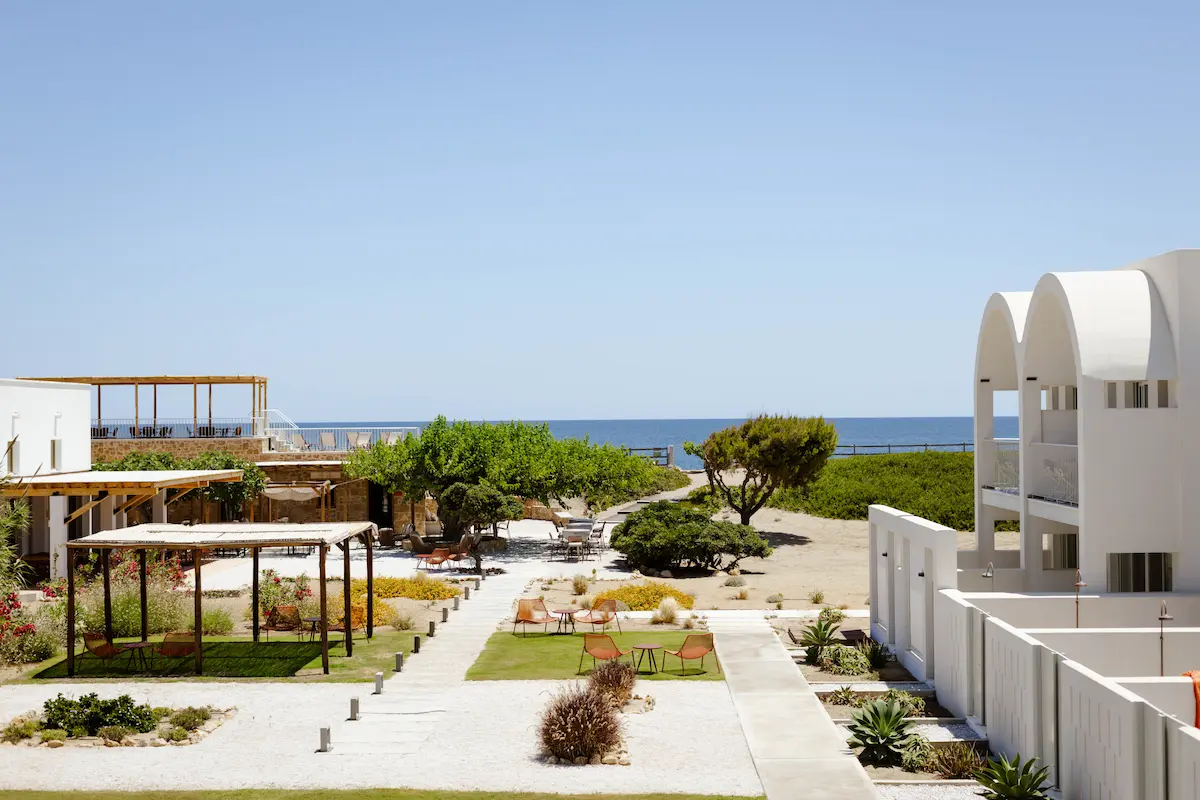
Skyros
Skyros sits alone in the Aegean off the eastern coast of Evia, the southernmost and most isolated of the Sporades, and feels nothing like the rest of them. The north is pine forest and pasture, the south is bare and Cycladic, and the Chora rises in a single whitewashed amphitheatre under a Byzantine castle.
The island has its own miniature horse breed, kept alive for over two thousand years; its own dialect of ceramics and embroidery; and, in the weeks before Lent, the Apokries Carnival, when the men of the village dress in goatskin masks and waist-belts of fifty kilos of bronze bells and walk the streets making a noise so old it predates Christianity. The sound is the closest thing modern Greece has to a Dionysian rite.
The food does the island as much justice as the festival. Skyros is where you eat astakomakaronada (lobster spaghetti) the way it should be eaten, lemony goat baked slowly in the oven, and ladopita, a fluffy fried oil-pie, served hot with xinotyri (soft sour goat’s cheese), the pairing you’ll find in every taverna and bakery on the island.
For an island this far off the main circuits, the cooking is some of the most interesting in Greece.
Getting there: A forty-minute flight from Athens to the island’s own airport (a few times a week), or the ferry from Kymi on Evia, itself a three-hour drive from Athens. No island-hop link to speak of, which is half the reason Skyros stays as it is.
Where to stay: ALERÓ Seaside Skyros Resort. Twelve suites on Vina Beach on the east coast, each with its own plunge pool and a path through the dunes to the sand.
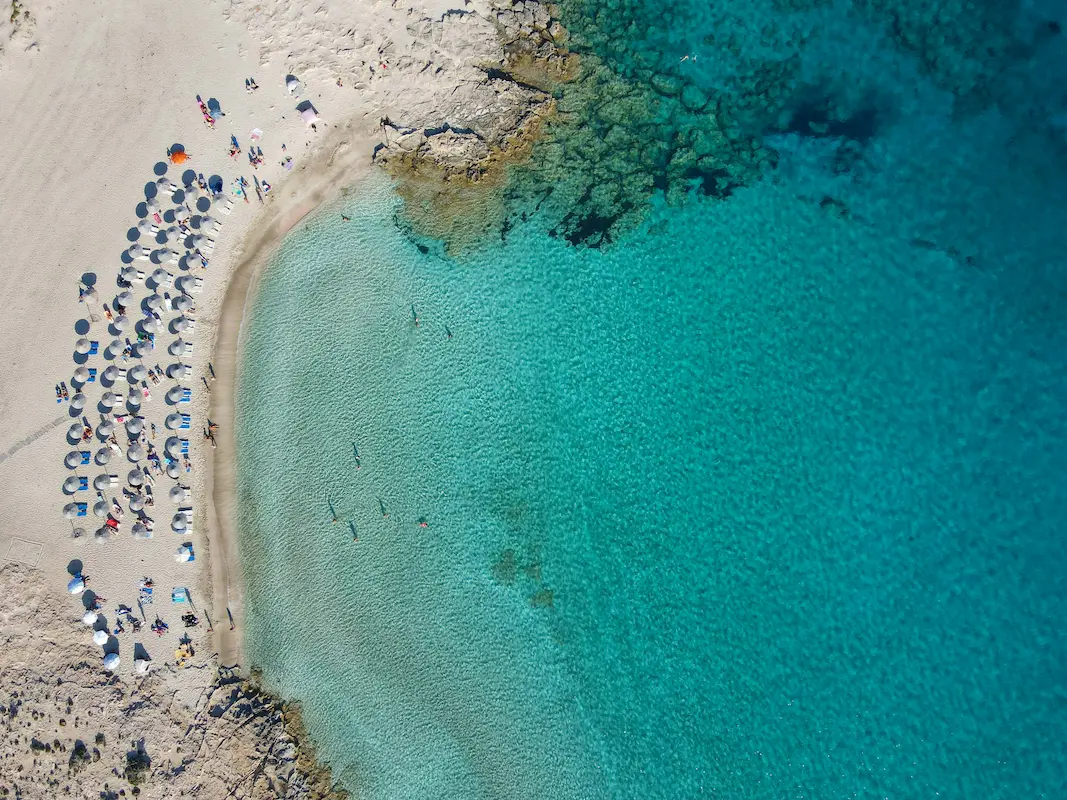
Karpathos
The second-largest of the Dodecanese, halfway between Crete and Rhodes, and the most rugged island in Greece you can fly directly to. Karpathos is long, narrow and dominated by a mountain spine that runs the full length of it. The south is gentler, with pine forests and the small capital of Pigadia.
The north stayed wild and without a paved road until 2011, when the first one finally reached Olympos. Down at Afiartis, on the southern tip by the airport, the meltemi funnels through a run of shallow bays that the world’s best windsurfers have known about for years. The east coast hides bays like Apella and Kyra Panagia that turn the Aegean turquoise in a way that does not photograph properly.
Karpathos is the cultural anchor of the eastern Aegean. The dialect spoken in Olympos preserves Doric Greek elements that linguists trace back over two thousand years, and the women still wear their *kavai* and *sakofoustano*, traditional dress with embroidered headscarves and double rows of gold sovereigns, not for the visitors but for themselves. Bread is baked in communal wood-fired ovens.
The wedding rituals, the panigiri around the Assumption of the Virgin on 15 August, the improvised rhyming *mantinades* sung over lyra and laouto into the small hours: none of it is staged. The Olympos festival was added to Greece’s national inventory of intangible cultural heritage in 2020. The food follows: *makarounes*, hand-rolled pasta with caramelised onion and grated *myzithra*; *kavourmas*, a local cured meat; *pouggia*, fried cheese-and-greens pies. Cooking that disappears the moment a village empties.
Getting there: Direct flights from Athens to the island’s airport year-round, with a few European charters in summer. The alternative is a long ferry from Piraeus, or a connection through Rhodes or Crete.
Where to stay: Silene Villas in Amoopi, on the south coast. Five spacious apartments on a hillside above the bay, each with a plunge pool, a kitchenette, and a terrace looking down to the beach. Built and run by Popi, with her mother Marianna in support. Silene is designed to be a comfortable, beautifully kept, family-run base. On Karpathos, that is the right call. The island does the work, and Popi looks after the rest.
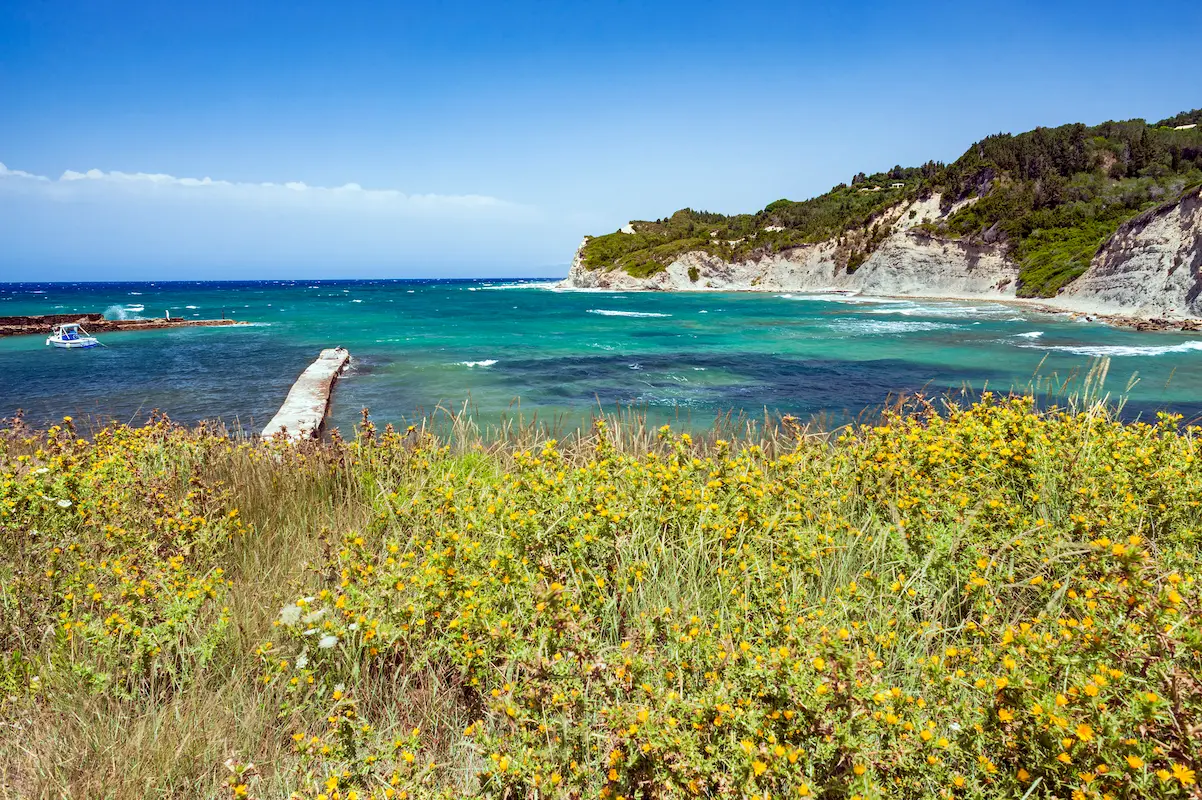
Erikoussa
The northernmost of the Diapontia Islands, Erikoussa is barely five square kilometres, with a winter population of a few dozen and a summer one of perhaps seven hundred, and it takes its name from *erica*, the heather that turns the hillsides purple in October. There is one road, a handful of tavernas, a couple of small shops, a single long sandy beach, and a sense of being at the very edge of the country. The community is so close-knit that the annual reunion of the Erikoussa diaspora from New York, where many of the island’s families ended up, is the high point of the calendar.
It is the obvious pairing with Corfu, and the best way to use it. For a day trip from a Corfu, it is the easiest off-grid afternoon in the Ionian. For longer, it is for people who want to read, swim, eat the day’s catch, and not see another boat for a week. The water is shallow, gentle and clear. The sand goes for kilometres. There is nothing else to do, and that is the entire point.
Getting there: Fly to Corfu, then across from the north coast: the speedboat from Sidari is twenty-five minutes, a sailing boat from Agios Stefanos about an hour. Always done as a pairing with Corfu.
Where to stay: Acantha Boutique Hotel. Five adults-only suites on the main beach, each themed around a different work by the Italian artist Emanuele Luzzati, run by Franca with attention that does not announce itself. The kitchen cooks the day’s catch from the boats outside, the way it should be cooked that evening. Understated, restrained, never showy, with the place itself doing most of the talking. Acantha is for couples, honeymooners, and anyone who truly means it when they say they want to disappear for a week.
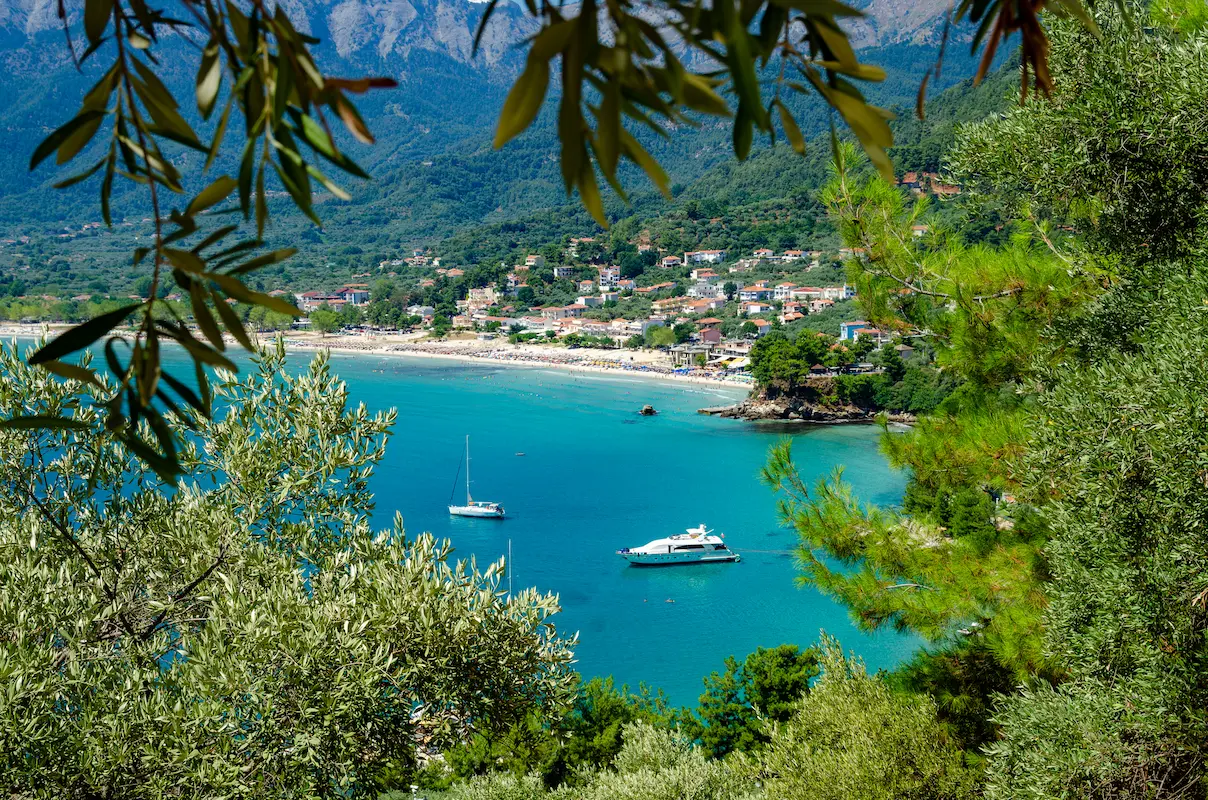
Thassos
One of the greenest island in Greece. Thassos sits in the northern Aegean, off the coast of Macedonia, an almost perfectly circular island ringed by pine forest that runs all the way down to the sea. The ferry from Keramoti takes thirty minutes and crosses water so clear it can be hard to gauge the depth. Inland, Mount Ipsarion rises to 1,200 metres, with chestnut and plane forests, mountain springs, and old mule paths that climb to monasteries with views across to Mount Athos and the Halkidiki coast. The island has been worked for marble since antiquity, and the marble shows everywhere: in the white pebbles of Saliara beach (Marble Beach) that turn the water tropical turquoise, in the cliffs at the natural lagoon of Giola, and in the columns of the ancient Agora at Limenas, the capital.
The villages are different here from the Cyclades: Panagia with its stone houses and chestnut shade, Theologos the old capital, where the lamb on the spit is the reason to make the drive, Mikro and Megalo Prinos hidden in the green folds of the mountain. The cuisine reflects the soil and the trees: PDO Throumba olives that ripen on the branch and dry in the sun, pine and thyme honey, the local feta and *kasseri*, olive oil pressed at small family mills, and (in winter) *piperolachana*, a sharp pickled-cabbage stew that anchors the island to its mainland roots. Each August, ancient drama is staged in the Great Theatre at Limenas, which has hosted performances for over two thousand years.
Getting there: Daily flights from Athens to Kavala (about an hour, plus European charters in summer). The airport sits twelve minutes from Keramoti, where the ferries to Thassos Town leave roughly hourly through the day.
Where to stay: Vathi Cove Luxury Resort & Spa. Set in a secluded, pine-shaded bay on the northeast coast, a short drive east of Limenas along the marble road past Saliara, then down a rough forest track that keeps it to itself. Adults-friendly, taking guests from fourteen up, with a spa and a kitchen that holds its own as the best on the island. A different kind of stay from anywhere else on this list.
If you read Part One, you have now seen all eight. If you skipped straight here: the bare, harbour-facing islands of the Aegean are over in Part One, and they are worth your time too.