






My Athens
In spring, the bitter orange trees — nerantzi — bloom across Athens and the city smells of their blossom. These trees are everywhere, lining streets and filling squares, heavy with small orange fruit that looks exactly like a clementine. Every year, without fail, I watch tourists pick one off a branch, peel it and bite into it, followed by squeezing their eyes shut in shock, because it is, in fact, ferociously sour.
My father, who is 85 and has watched this city change around him, has a theory: they were crossbred decades ago to keep colour on the trees (and streets), because if the fruit were sweet, Athenians would have stripped them bare by June. I have no idea if this is true. It sounds right.
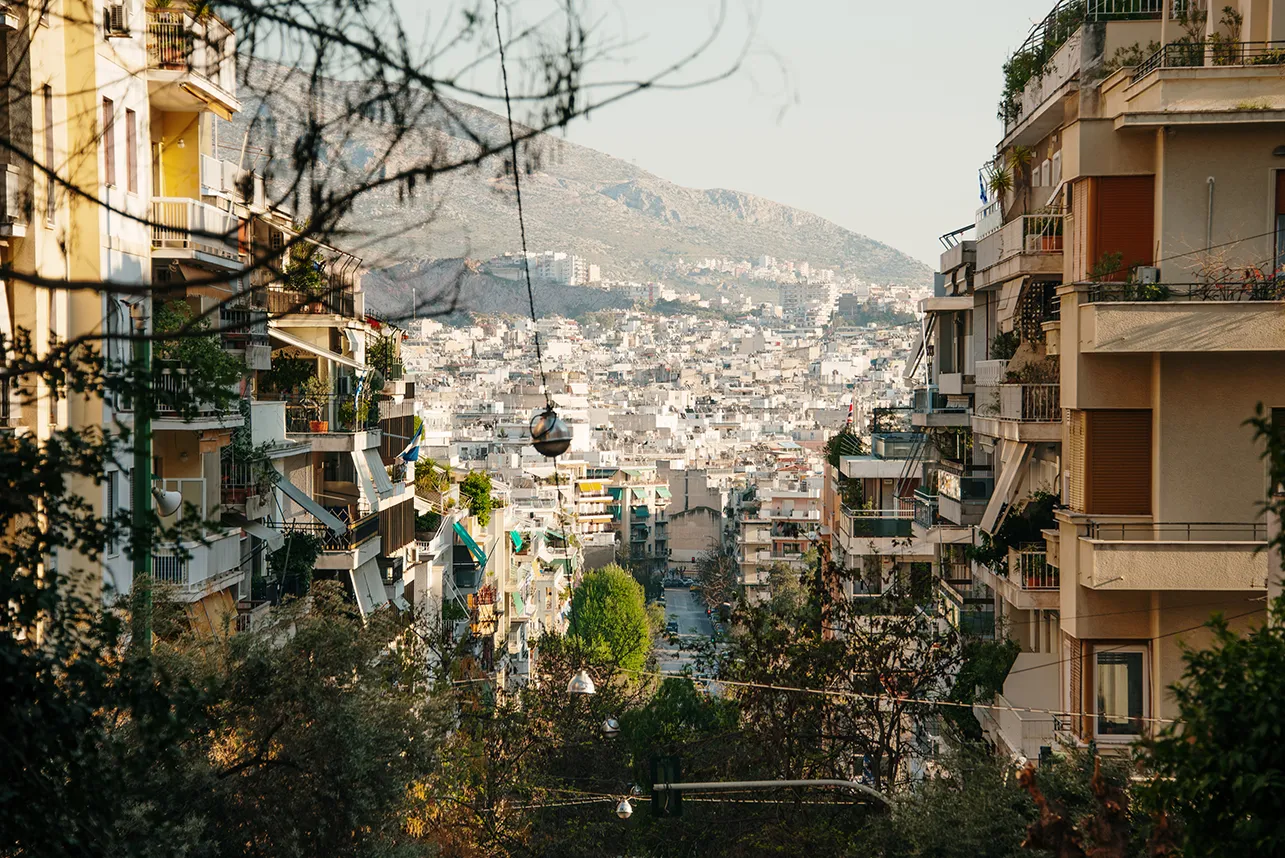
Athens is a city I have tried to explain to people for years and have never quite managed in a single conversation. It is ancient and modern and chaotic and calm, sometimes all on the same street, sometimes all in the same hour. The best I can do is this: it is a city that is generous with its time. Dinner starts at nine or ten, the table is yours for as long as you want it, nobody brings the bill until you
ask. There is no second seating, no rush. That rhythm, the refusal to be hurried, is the thing about Athens that changes how everything else feels once you’ve spent a few days here.
I live in Athens. I have spent half my life here. And I still can’t drive down Patission Avenue without losing my focus on the road, because the Acropolis is right there, at the end of the avenue, enormous and so present that it feels less like a monument and more like something the city is still in conversation with. I don’t think that goes away.
A City of Neighborhoods
The Athens I know is not one city. It is a series of neighbourhoods, each with its own rhythm and personality, and the best way to understand the place is to move between them, preferably on foot.
Kolonaki is polished, residential, and posh. It’s the closest thing Athens has to New York’s Upper East Side. Athenians actually live here, which gives it a settled, unhurried quality that the more tourist-facing parts of the centre don’t have. The boutiques are upscale, the galleries & museums are serious, the coffee is excellent, and nobody is wandering around looking lost.
Pangrati is younger, looser, and still deeply rooted in its own character. A Greek patisserie that hasn’t changed since the 90s sits a few doors down from a new gallery and whatever wine bar everyone has been talking about this season. It hasn’t had to shed its old identity to accommodate the new one; they coexist on the same block, and that friction is what gives the neighbourhood its particular energy.
Koukaki sits in the shadow of the Acropolis, literally, and draws both visitors and a younger local crowd who have built a scene around its narrow streets, conregating in its cafe, book stores, spritzerias & restaurants. But Koukaki is so much more than that. EMST, the National Museum of Contemporary Art, is here too, and it gives the neighbourhood a cultural seriousness that visitors may walk right past on their way to the Parthenon.
Monastiraki is where the crowds arrive first, and that’s fine. It’s the front door: the Flea Market, the spice stalls, the vintage shops, Ermou Street feeding crowds into the square, hawkers and buskers and the smell of roasting corn, the Acropolis framed at the end of every sight-line.
When I have friends visiting from abroad, we almost always end up here because you have to. I take them on the side streets, though, not Ermou, which is crowded and impersonal. The quieter routes are where you find the local ateliers, and the little stretch near the church where Orthodox shops sell icons, incense burners, and leather-bound prayer books. Before we leave, I always walk them up to Anafiotika, the tiny Cycladic village tucked into the rock just below the Parthenon: whitewashed houses, bougainvillea, cats asleep in doorways. It was built in the 19th century by workers from Anafi island, and it still feels like a part of an island dropped into the middle of the capital. Most people don’t even know it’s there.
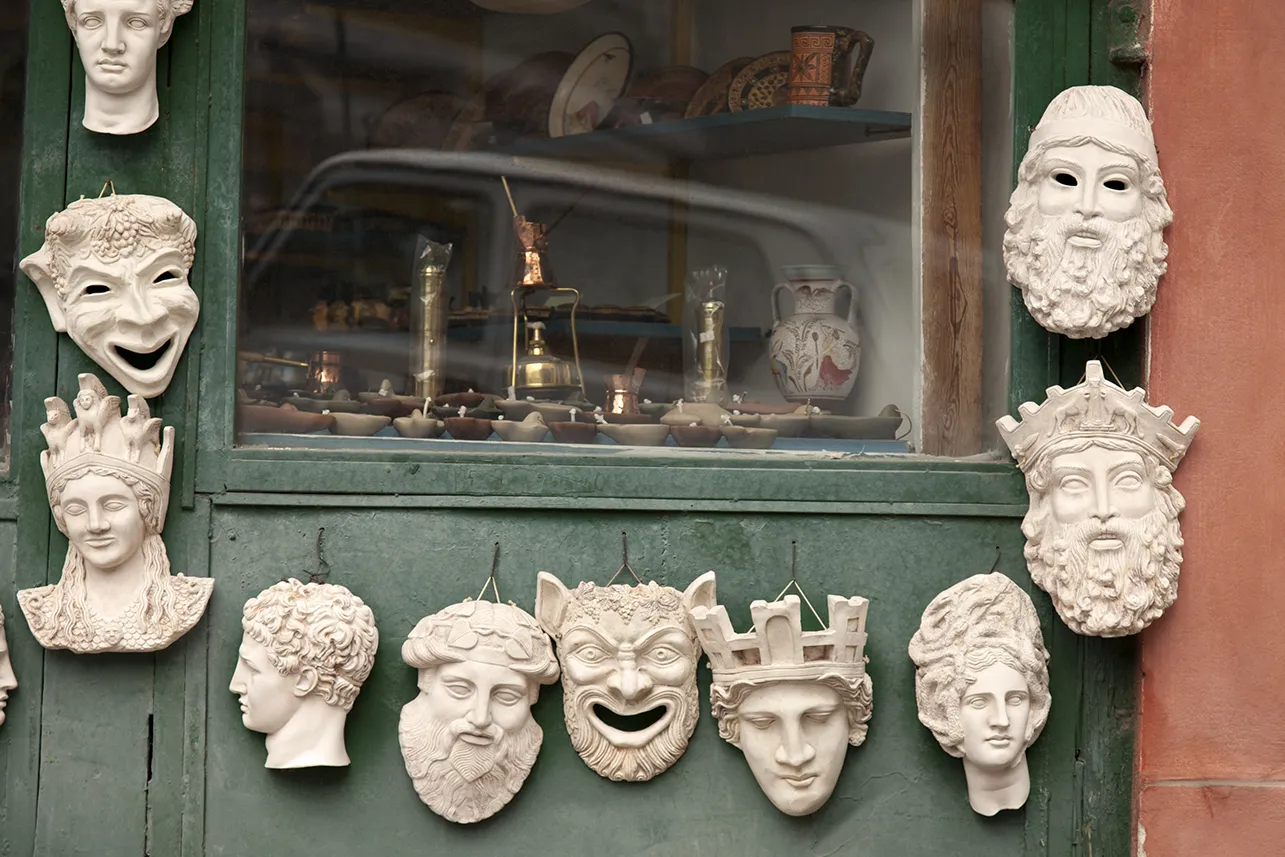
The pedestrian street from Monastiraki to Thisio is worth the walk too, because the ancient Agora and the Acropolis are on full display above and beside you; the road is lined with small antiquity shops that have been here longer than most of the restaurants around them.
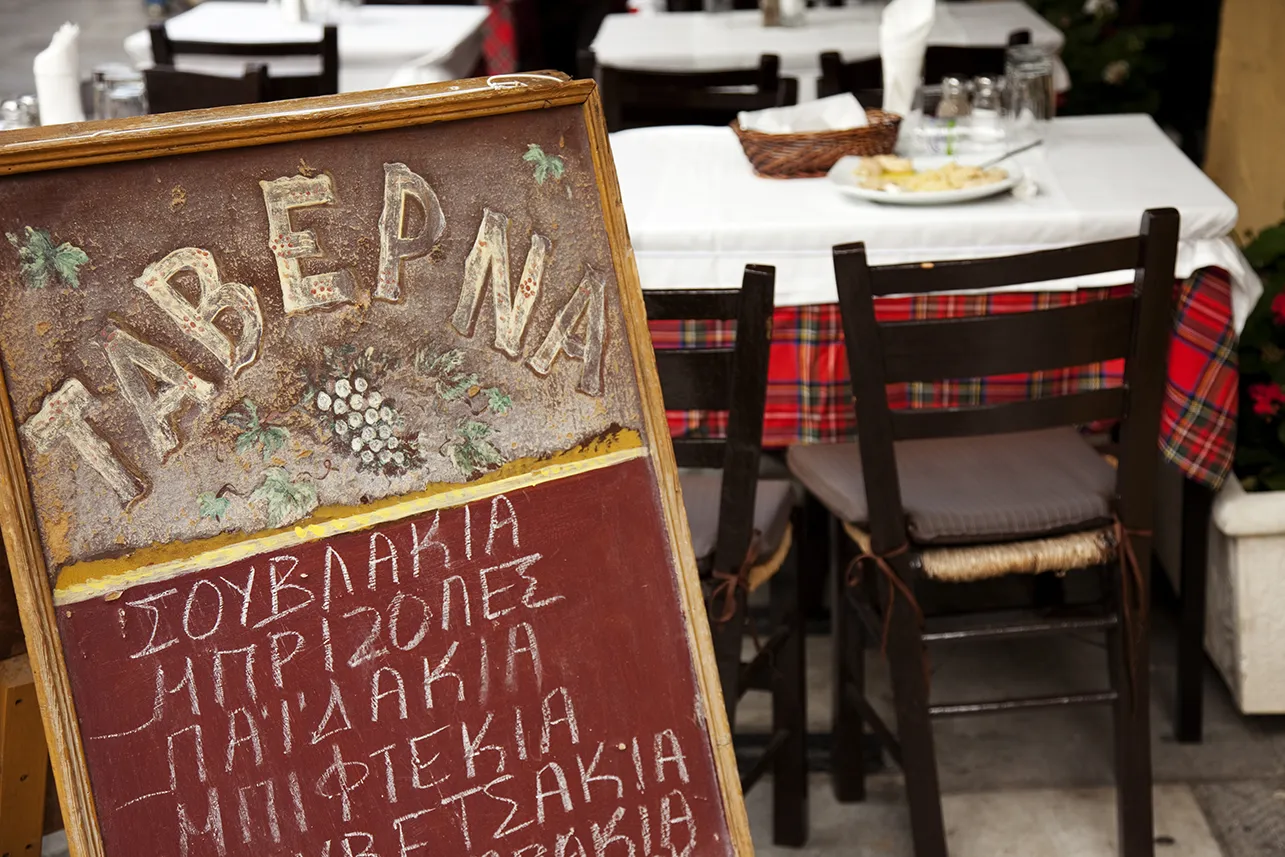
Psyrri is louder, messier, more contradictory. Street art on every surface, late-night bars, tavernas that have been serving the same dishes for decades next to cocktail spots that opened last month. The honest truth is that the main strips have their share of tourist traps, and I would steer you away from most of them without hesitation. The side streets, however, are a different story, and some of the most interesting restaurants and hotels in are hidden in the parts of Psyrri that don’t advertise themselves.
Keramikos and Metaxourgeio, just to the west, are grittier. Some streets are rough, and these are not the obvious neighbourhoods for a casual wander. But this is where galleries like The Breeder and Rebecca Camhi set up years before anyone else saw the potential, and the area has become one of the most important pockets of contemporary art in the city.
Exarchia is the one most guides either romanticise or skip. The truth is more interesting than either version. It is edgy, yes, and also alive in a way that few other Athenian neighbourhoods are right now. Artist studios, local shops, restaurants, bars, a real mix of ages and backgrounds. At Tositsa 3, three of the city’s most compelling galleries, Radio Athènes, Eleftheria Tseliou, and Hot Wheels Athens London, share a single building, rotating exhibitions across three floors. The programming changes seasonally, and it’s worth checking what’s on.
Exarchia isn’t for every visitor, but if you want to see what Athens looks like when it isn’t thinking about tourists at all, start here.
Then there’s Kypseli, often overlooked from visitors’ radar. Some call it the Brooklyn of Athens, and the comparison holds: a big expat community, a creative crowd, interesting bars & restaurants clustered around a faded Art Deco square.
Ten years ago, coming out of the worst of the financial crisis, Kypseli looked nothing like this. The transformation has been remarkable, and it is still happening.
Central Athens vs Athens Riviera
This is always the first question I ask when someone comes to me planning a trip: not which hotel, but first, where?.
Central Athens puts you in it. The Acropolis on foot, museums, galleries, restaurants, rooftops, the energy of a city that has been lived in continuously for thousands of years. It is dense enough that everything is walkable and loose enough that you don’t feel hemmed in. If you want Athens to be about Athens, stay in the centre. That’s where I would start most people.
The Athenian Riviera is a completely different experience, and its history is longer than most visitors realise. In the 1960s, this forty-mile stretch of coastline south of Athens was one of the most glamorous addresses in Europe. Sinatra had a bungalow at the Astir Palace and Bardot was spotted in Glyfada. Shipping families, politicians, film stars all spent time here. Then the islands captured the international imagination, and the Riviera faded. For a long time it was a local memory and not much more.
That chapter is firmly over. The Four Seasons took over the Astir Palace site in Vouliagmeni and turned it into one of the finest resort properties in the Mediterranean. One&Only Aesthesis opened in Glyfada on the grounds of the old Asteria beach club, a place that was the centre of the scene in the fifties and sixties. Ace Hotel arrived in 2024. The Vouliagmeni marina now has designer shops and global outposts of restaurants sitting alongside the yacht berths. And further south, the Elliniko project, built on the site of the old airport, is set to reshape the entire coastline with residential towers, a new marina and a coastal park larger than Hyde Park. The Riviera hasn’t come back. It has surpassed the original.
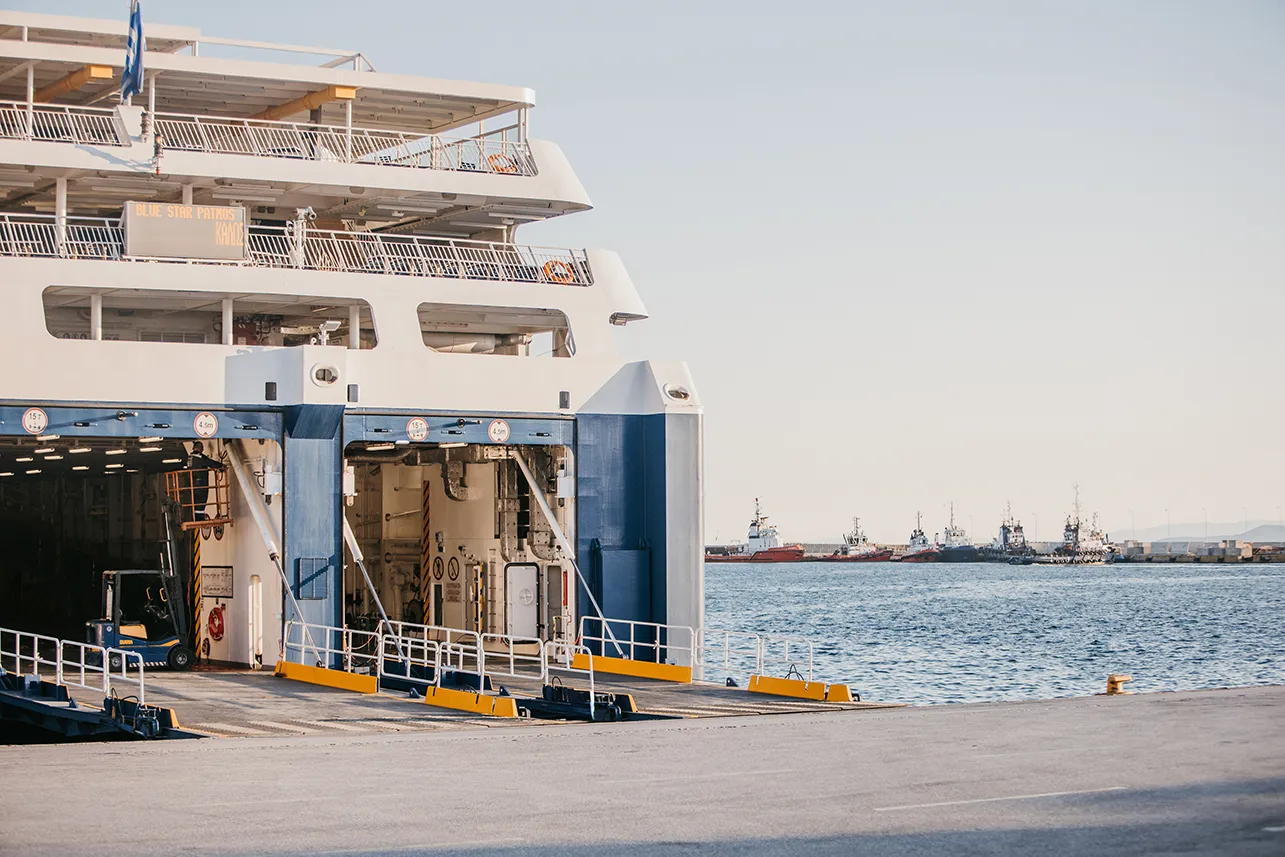
How you split your time depends on when you’re coming and what your trip looks like. If you’re visiting in summer and heading to the islands, start with two or three nights in the centre, take the ferry from Piraeus, and on the way back, carve out a 1-2 nights on the Riviera to decompress before the flight home. In other seasons, when you might not be island-hopping, do the centre first and then move south while the weather is still warm enough for the beach. And if you’re arriving on a long transatlantic flight and the thought of diving straight into city energy makes you tired just reading this, flip it: start on the Riviera, shake off the jet lag with sea air and a pool, and ease into Athens once your body has caught up.
The Table
Athens is one of Europe’s most exciting food cities, and it got here without much international fanfare. That is changing fast.
The taverna tradition is deeply alive. The best ones, the ones that have survived on the quality of their cooking rather than the advantage of their location, are worth going out of your way for. But alongside them, a new generation of restaurants has raised the bar considerably: chefs who take exceptional Greek ingredients, treat them with genuine intelligence, and serve them in rooms where you want to stay for hours.
And then there are the places I love most, the ones with no signage and paper tablecloths where the menu is whatever came in that morning and the bill is half what you’d expect. Athens has never lost those, and finding them is one of the great pleasures of eating here. A meal doesn’t have to be elaborate to be unforgettable. Some of the best things I’ve eaten in this city have been the simplest: a wild Mediterranean sea bass, grilled whole, the flesh still tasting of sea salt. A plate of tsipoura (sea bream) at a waterfront taverna where the fish came off the boat that morning. The food here tastes different because the ingredients are different, and once you’ve had them at their source, you understand why.
Athenians have grown up on the bakery. It is part of the daily rhythm in a way that goes well beyond breakfast: bread, tiropita, spanakopita, the quick bite between errands that generations have done. These are flavours that have travelled far beyond Greece, but they are better here. And alongside the traditional bakeries, a new wave of upscale patisseries has arrived, part of a global trend that didn’t take long to reach Athens.
Shopping
Athens has a shopping scene that most visitors don’t expect, and it goes well beyond the tourist strips. There are jewellers and antiquarians who have been in the same family for generations, alongside a newer wave of Greek designers and concept stores that have put the city on the map for fashion and design in a way that would have seemed unlikely fifteen years ago.
Martinos for antiques, Nikos Koulis & Lito for fine jewellery, Ancient Greek Sandals in its original flagship. That should give you an idea of the range.
Wine Bars, Bars & Long Nights
Athens eats late and drinks later. Dinner rarely starts before nine, and what happens after is less nightlife in the way other European cities define it and more a natural continuation of the evening. The meal doesn’t end so much as shift to the next place.
Natural wine bars have taken hold across the city, where the lists change weekly, the owners pour, and two hours disappear without anyone noticing or caring. Cocktail bars have sharpened too, especially around Syntagma and on the quieter streets that branch off the busier neighbourhoods.
After that, the evening takes whatever shape you want to give it. There are clubs, open-air venues along the Riviera in summer, and a growing number of places where a late drink turns into dancing without anyone making a conscious decision about it. But just as often, the best night in Athens is the one where you never leave the neighbourhood. Most bars stay open as long as there are people in them, and there are people in them well past three in the morning. There is no last call, no announcement, no one checking the time. The night runs until it’s finished.
Open-Air Cinemas
From May through September, open-air cinemas appear across Athens: rooftops, courtyards, small squares between apartment buildings. Most neighbourhoods have one, some of them decades old, and for many Athenians, their first screening of the season is how they know summer has properly arrived. I know I feel it.
There’s Cine Thisio, with the Acropolis rising behind the screen and Cine Paris on a rooftop in Plaka. What’s playing matters far less than where you’re watching it, and the particular pleasure of a film outdoors on a warm Athenian evening is one of those experiences that is hard to explain to someone who hasn’t done it.
The tradition stretches well beyond Athens and onto the islands, where screenings happen on beaches, in castle courtyards, and on clifftops. Some of the most beautiful are worth planning a trip around.
After Dark, at Street Level
The rooftop bars get the attention, and they deserve a visit. The Acropolis lit at night, the city stretching to the coast, a drink in your hand. It is a particular pleasure, and Athens does it better than almost any city in Europe because the thing you’re looking at from up there is genuinely one of the most extraordinary sights in the world.
But it is worth knowing that this is mostly visitor territory. Athenians spend their evenings differently. We go to our plateia, the neighbourhood square, where the same tables have been set out for years and the waiter already knows what we’re ordering. In summer especially, this is how the city lives once the sun goes down: parents sit and talk, children run around playing, someone orders another round, and the evening stretches until it simply can’t stretch any further. It is the very essence of Greek summer, and it happens in every neighbourhood, in every village, across the entire country.
Both experiences are worth having. Do the rooftop once or twice, take the photographs, enjoy the spectacle. Then find a plateia, anywhere really, sit down, order what the table next to you is having, and stay until you feel like leaving. That is closer to the way this city actually lives, and it is the version of Athens that stays with you.
The Ancient and the Now
The Acropolis is the obvious starting point, and it should be. I have been more times than I can count, and it still stops me. Nothing prepares you for the Parthenon at close range, no matter how many photographs you’ve seen. How you visit matters: early morning or late afternoon, midweek if you can manage it, and with enough time to sit on the rocks and look rather than shuffle through with the crowd. I prefer the evening hours, when the light turns deep orange and the whole city is laid out below you, from Dionysos mountain on one side to other with the Aegean sea stretching out in that particular shade of blue that postcards can never quite capture.
Below, the Acropolis Museum is the essential companion, and it earns an unhurried hour on its own. The National Archaeological Museum, further north near Exarchia, is one of the finest collections of its kind anywhere and sees a fraction of the visitors it deserves.
But the cultural city does not stop at antiquity. Onassis Stegi has become one of the most ambitious performing arts centres in southern Europe. Stavros Niarchos Cultural Center further south is also an important addition to the city’s fabric. EMST anchors the contemporary art scene in Koukaki. And the commercial gallery world, spreading through Keramikos, Metaxourgeio, and now Exarchia, has pushed Athens into a genuine international conversation. What makes this city unusual is how close the layers sit to each other. Walk ten minutes in any direction and you cross a thousand years.
Escapes from the City
Piraeus is twenty minutes from the centre, and from there the Saronic islands are closer than most people think. Hydra is 90 minutes by fast ferry, and with no cars, no chain hotels, & stone houses climbing a harbour that looks untouched it is worth a spending a day or two. Aegina is even closer, forty minutes, with a pistachio-scented port town and the Temple of Aphaia, which on a clear day gives you a sightline all the way back to the Acropolis.
Cape Sounion is an hour south by car. The Temple of Poseidon on the cliff edge, the Aegean below, and if you time it for sunset you’ll understand why people have been making this trip for as long as there have been people to make it.
And if you’re heading to the Peloponnese, there is good reason to take your time getting there. Acrocorinth, the ancient fortress above Corinth and a short drive away is wine country in Nemea scattered with old world wineries. The Ancient site of Mycenae is also close by. All are within easy reach of Athens, and all worth a stop before the road opens up ahead of you.
What's On
Athens has a cultural calendar that runs year-round and extends well beyond the museums. Exhibitions, festivals, performances, food events, and the kind of one-off happenings that give you a reason to time your visit around something specific.
We update this section regularly.
Still Here
Much like his theory about the nerantzi trees, my father has a version of Athens that hasn’t changed much. The places he goes back to still have the same clientele, and he returns not for the novelty but because the city around him, for an hour or two at least, feels the way it did when he was young, six decades ago. He remembers an Athens where men wore hats and said “pardon” and “excuse moi” on the buses
(people spoke French before they spoke English). A time when the zacharoplasteio was where you went on Saturday and Sunday and men in suits gathered at the kafeneio daily to share their news over a cup of
elliniko.
Some of those places still exist. When he visits, he takes me to Krinos, which has been open since 1928, for loukoumades (not the new-wave kind — the real ones) and it’s our thing. His Athens and mine are different cities, but they sit on top of each other.
That’s true of the whole place. You’ll walk past one of the best restaurants in the city, which is next to a grungy bar, and just around the corner there’s a shop selling hand-made baskets that’s been there since the 60s. That’s just how Athens works. Old and new don’t compete here so much as lean against each other.
That’s what makes it hard to summarise and impossible to exhaust. Every time I think I know this city, it shows me something I missed.
I don’t think you can know Athens on a single visit. But you can fall for it on one.
Everyone does.
In Summary
- Neighborhoods
- Centre vs Riviera
- Dining
- Shopping
- Bars, Wine Bars & Nightlife
- Open Air Cinemas
- After Dark
- Ancient & Now
- Escapes from the City
- Cultural Calendar
- Still Here