






Blue Flag Beaches in Greece
Blue Flag List – Greece
The cleanest, best-kept coasts in Greece, region by region, and the stays that sit right with them.
Every year, the Blue Flag list is published, and every year Greece comes near the very top of it.
The award is international, given to beaches all over the world, and Greece comes in with 624 beaches that made the 2026 list, second only to Spain.
Admittedly, it’s quite a long list to read, so we’vee read it for you and edited it down to the beaches worth visiting which also pair well with stays that sit on or close to them.
What does the flag flag actually mean? It is given only to beaches that meet a particular standard: water clean enough to pass a laboratory, lifeguards through the season, proper facilities, safe and gentle access to the sea.
It lasts a single year, so the whole thing has to be earned again every summer.
We have started in Athens, where most trips to Greece begin, and worked outward from there.
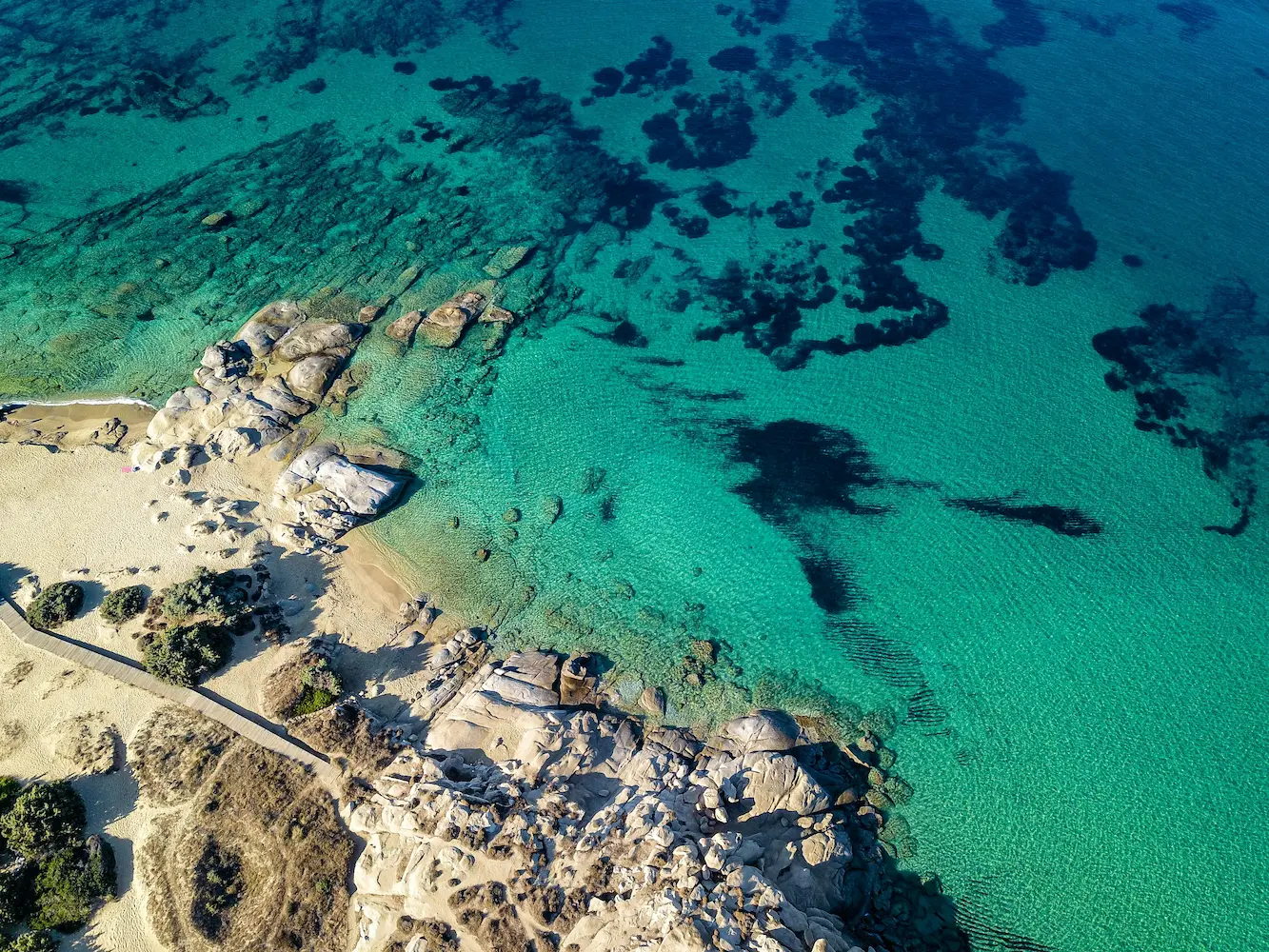
The Athens Riviera
Athens has its fair share of gorgeous beaches, and quite a large selection to choose from:
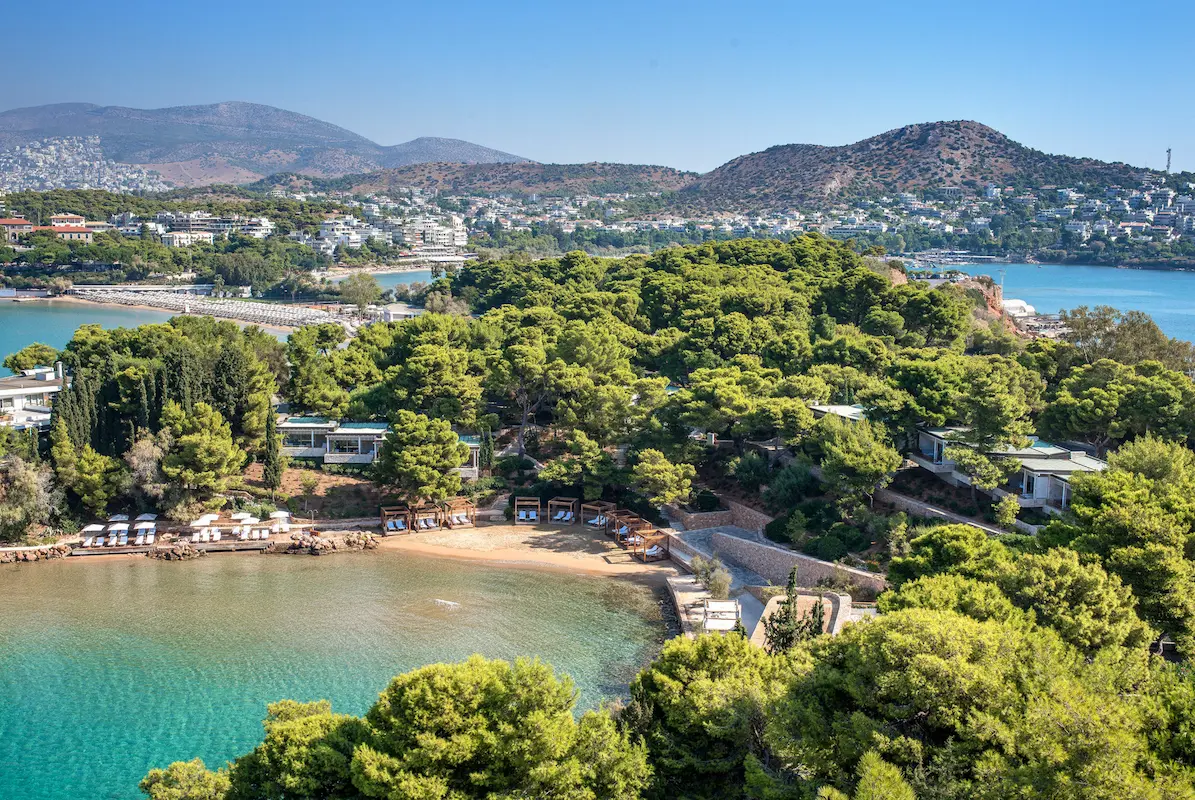
Vouliagmeni
Astir Beach Club is the benchmark, a crescent of fine sand on a pine-covered cape, the water deep and calm.
Four Seasons Astir Palace, with its own private beach section, separate from Astir Beach Club, opens straight onto it, twenty-five minutes from the Acropolis and a world away from it.
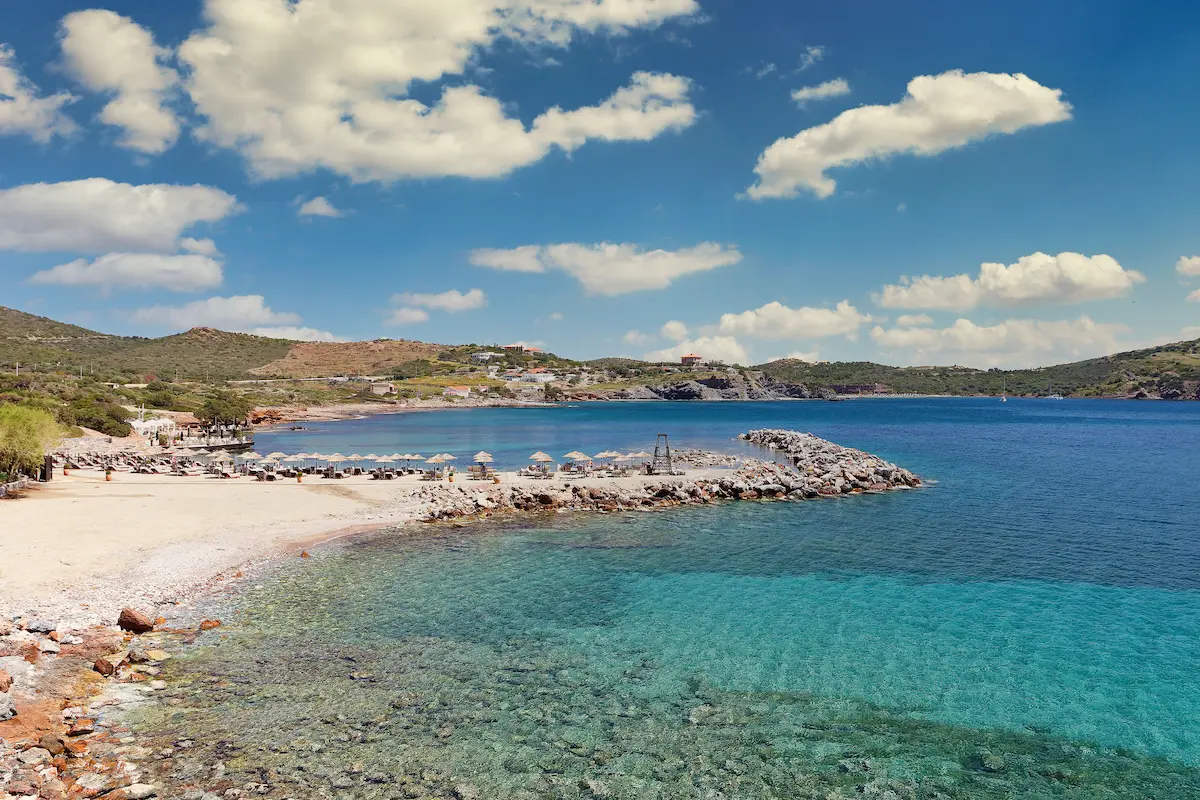
Sounio
Further south the flag flies at Cape Sounio, where you swim below the the Temple of Poseidon as the light turns to gold. No flag could certify a view like that; the water, at least, it can vouch for.
The Peloponnese
The mainland keeps its finest coast in the far southwest, where the olive groves of Messinia run almost into the sea.
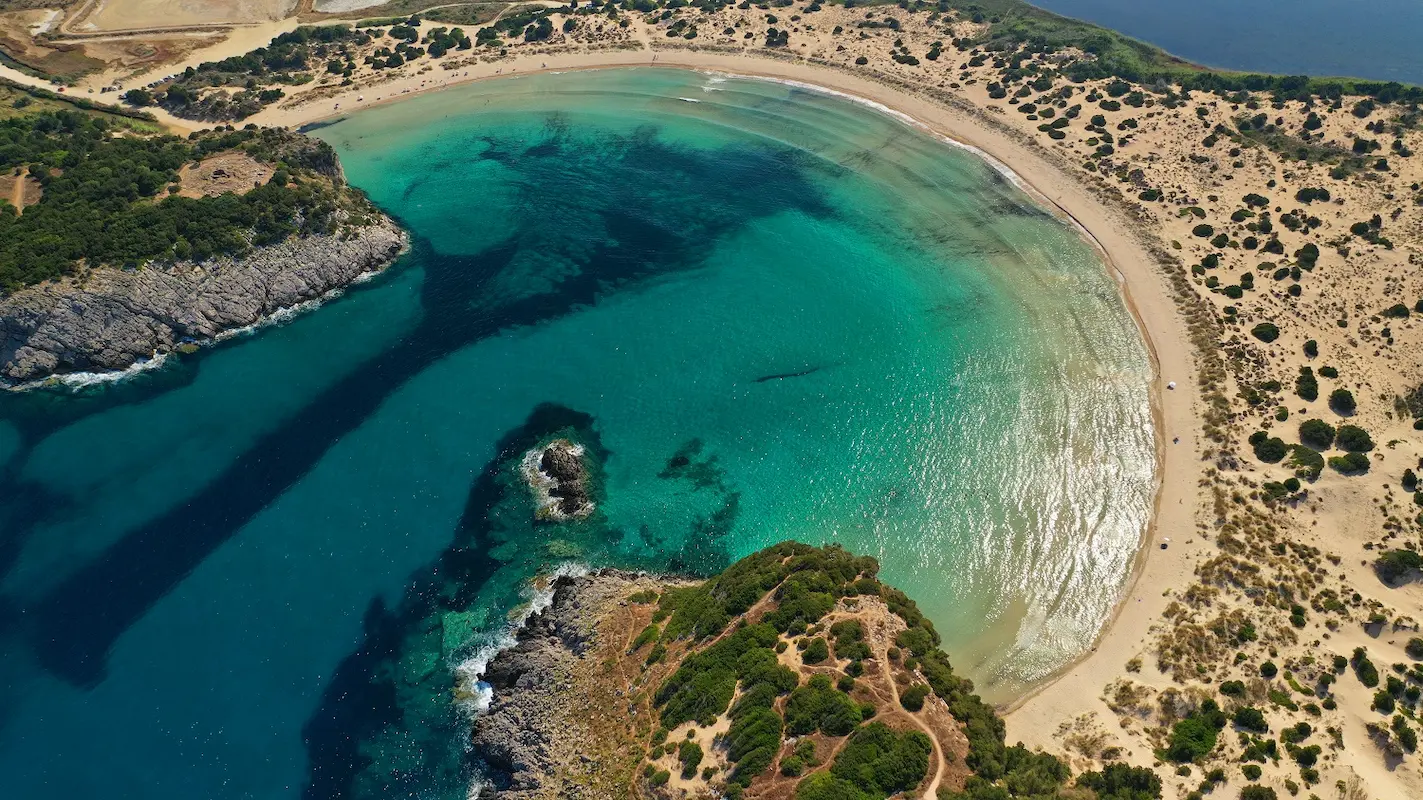
Navarino
At Navarino, a single beach of golden sand stretches more than a kilometre along the dunes and turns deep amber as the sun drops into the water. Loggerheads still haul themselves ashore to nest.
This is the flagged beach W Costa Navarino and Mandarin Oriental share, with nothing behind it but sand, grass and sky.
A short ride away lies Voidokilia, a flawless omega of pale sand wrapped around a still lagoon, written into the Odyssey and left, quite deliberately, without a single sunbed. The flag is for the run beach. The legend is for the wild one.
The Sporades
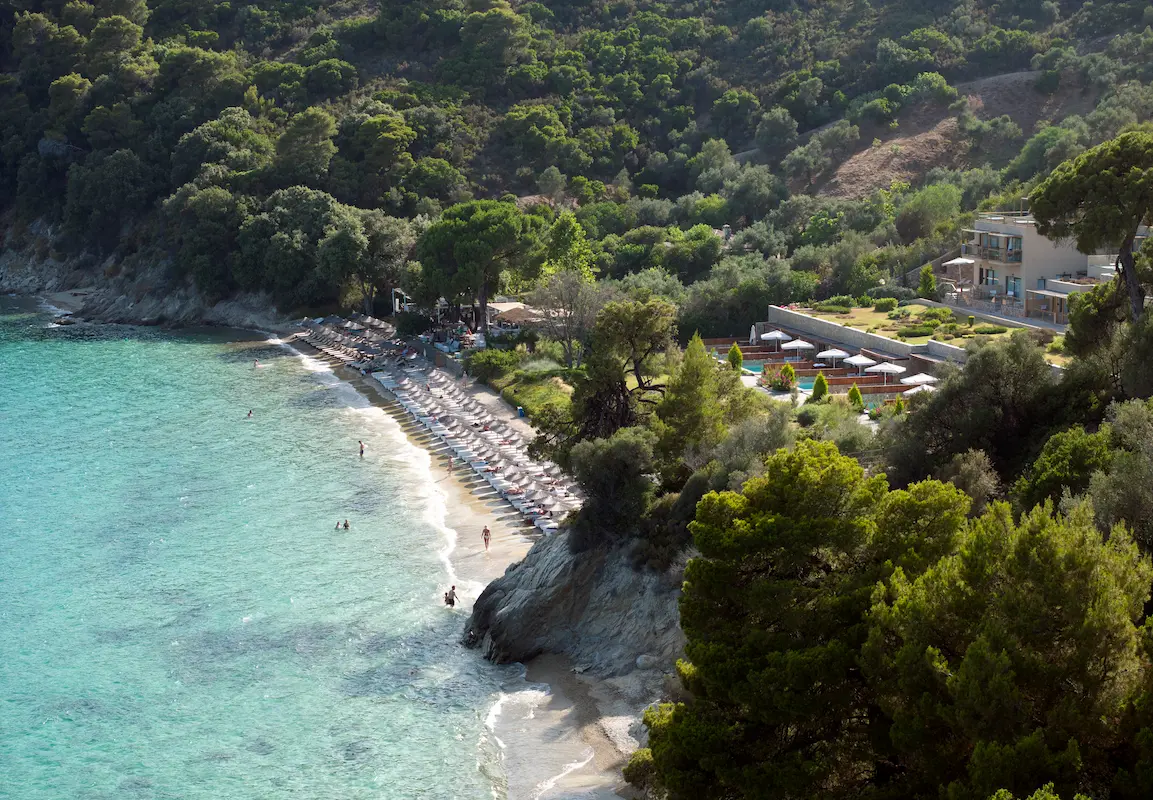
Skiathos Island keeps nearly all its flags on one green peninsula at the southwestern tip, which feels a little like cheating.
Koukounaries is the headline, a long curve of sand the colour of pale honey, dense pines behind it and a freshwater lake where a black swan patrols the reeds.
Round the point, Ambelakia and the two Banana beaches are softer and emptier, the sand butter-fine, the water going from glass to deep turquoise in a few unhurried steps.
Three of them fly the flag and all of them belong to Elivi Hotel, which sprawls across the whole headland. The only real decision left is which beach to be idle on.
Crete
Crete has more Blue Flags than any region in Greece, and the best of them hide in plain sight, gathered around a single bay.
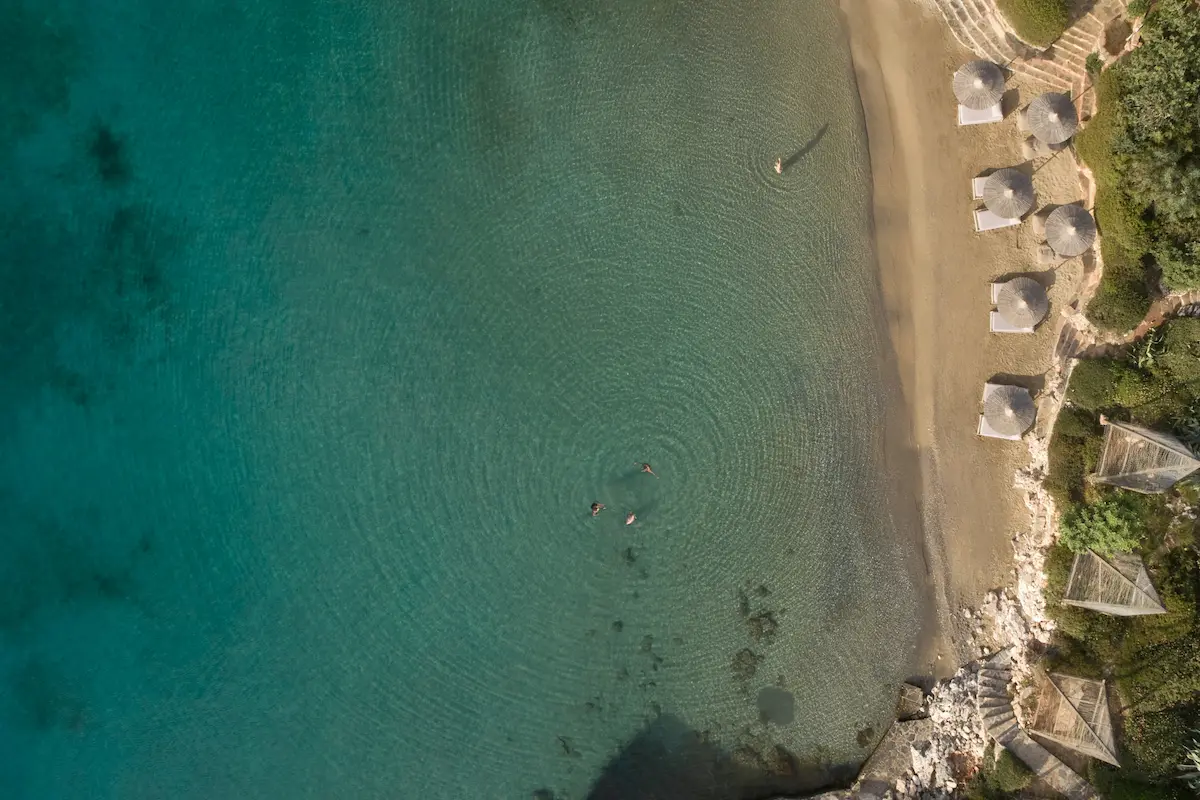
Elounda
Mirabello curls so far behind the Spinalonga peninsula that the sea inside it more or less forgets to move. The beach at Elounda is fine pale sand softening into small smooth pebbles, the water a flat light blue, the old fortress island of Spinalonga sitting low on the horizon with all its history intact.
This is the water Minos Beach and Minos Palace have looked over for decades, with Domes of Elounda just along the coast on its own flagged stretch at Driros.
Chania
On the west side of the island, the flags keep coming: the long open sand below Domes Zeen, and the wide shallow bay below Domes Noruz, where at golden hour you can wade halfway to the horizon and still be standing.
Halkidiki
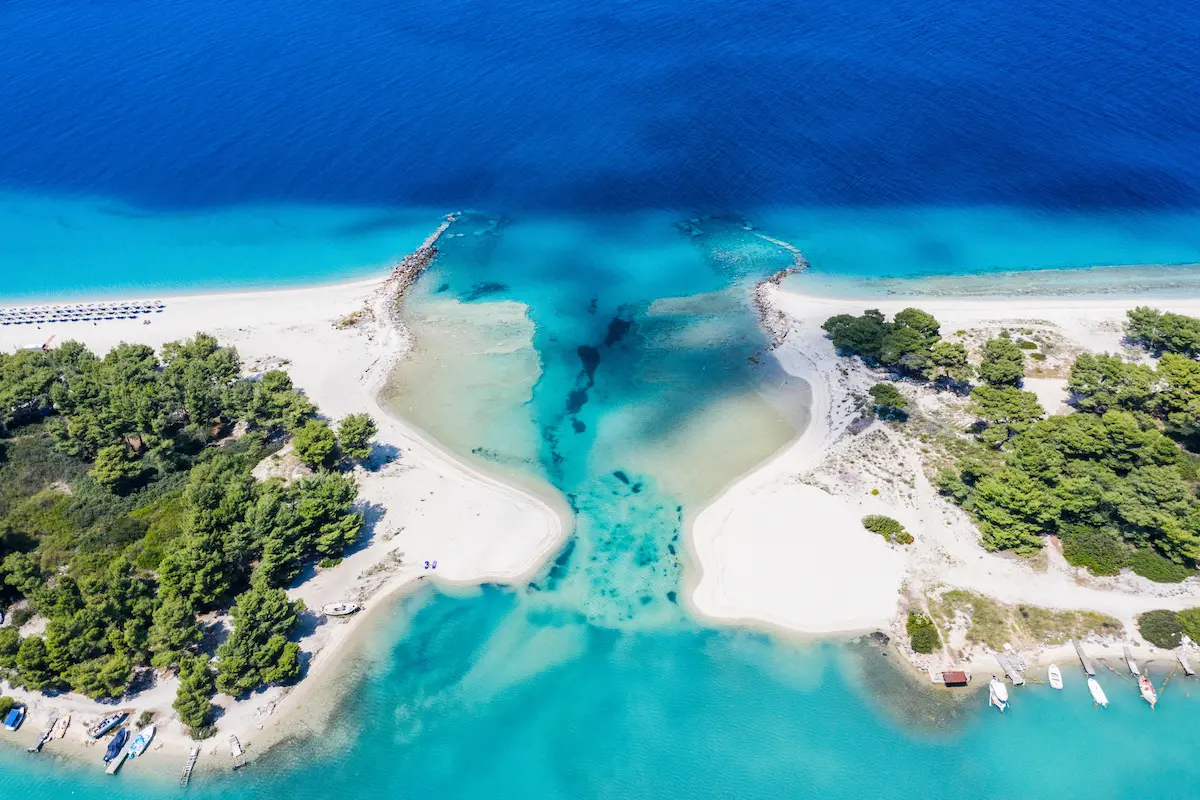
Halkidiki flies more flags than any prefecture in the country, a fact the rest of Greece tends not to dwell on.
Three long fingers of pine reach into the north Aegean, and the feeling changes as you cross between them.
On Kassandra, Sani runs seven unbroken kilometres of soft golden sand behind its own forest, warm and shallow and made for long, slow days.
Ikos holds the same coast; stay at either resort for a family friendly heavenly escape and leave the beach only if you want to.
Cross to Sithonia and the colour sharpens: at Vourvourou the sand turns white, the water a clear green, the bay scattered with small islands you can swim out to and keep to yourself. Ekies opens onto it, and to our eye it is the prettiest flagged beach in the north.
The Ionian
The Ionian is the verdant side of Greece, and its flags fly on water that runs from jade to ink.
Corfu
Glyfada is so wide and shallow it behaves like a lagoon, pale gold underfoot with green cliffs piling up behind, and Domes of Corfu has direct access.
At Dassia, olive and pine lean clear over a strip of sand and fine pebble Ikos keeps its flag, and the certification turns up again further south at Moraitika, below Domes Miramare.
Just above Dassia, Kommeno sits under Corfu Imperial, one of the finest resorts on the island.
Kefalonia
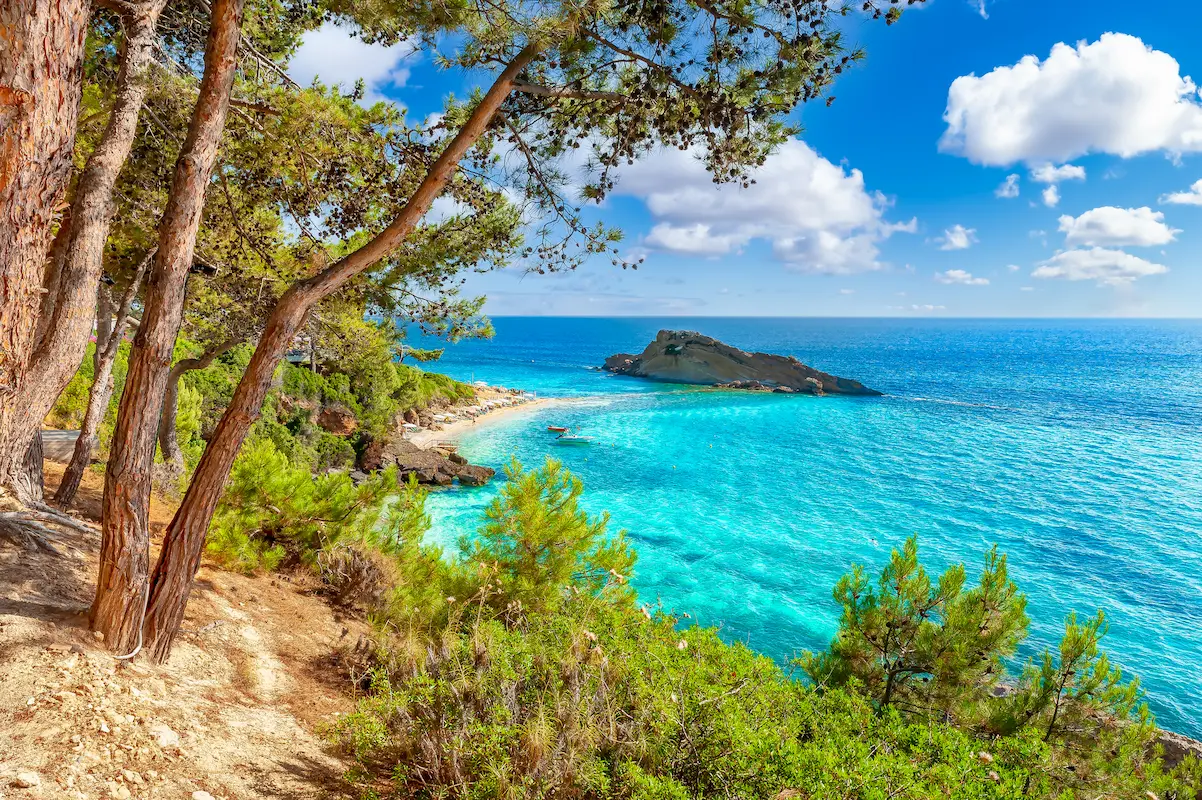
Kefalonia gathers its flags around Lassi, where Makris and Platis Gialos lie side by side, fine yellow sand and shallow turquoise parted by a few low rocks, White Rocks Hotel standing in the pines above is the ultimate Ionian escape.
South at Lourdas, a kilometre and a half of pale sand runs beneath the hills with Eliamos and Ef Zeen looking down on it.
Zakynthos
Zakynthos keeps its certified sand in the southeast, at Banana and Gerakas, long honey strands where the turtles still nest and Olea sits a short hop away.
Lesante Cape holds the wild northern tip, which is a different pleasure altogether.
The Dodecanese
The southeast islands catch the clearest, calmest water in Greece, almost all of it on their sheltered eastern shores.
Rhodes
With more flags than any island in the Dodecanese, nearly all of them down that protected east coast where the sea barely ripples.
They run from Kallithea, with its art-deco springs and glassy water, through Faliraki and on to Psaltos beneath the great rock of Lindos, gold sand and turquoise shallows the whole way.
AMOH, the island’s newest luxury hotel addition, sits along this coast, and we keep private villas across the island for anyone who would rather have the beach without the buffet.
Kos
The long sandy sweep of Kefalos curves around the island’s southwest tip, soft and shallow and certified, with Ikos Aria opening onto it.
The Cyclades
The Cyclades wear their flags lightly, and almost never on the coves you have already seen on a postcard.
Naxos
Agios Prokopios and Plaka, mile upon mile of pale fine sand and water you can see your feet through, plainly among the loveliest beaches of the island.
The flag flies at Aneroussa, a sheltered gold cove with Aegea Blue Resort just above.
Sifnos
The island keeps its flag at Platis Gialos and Kamares, broad sandy bays under the hills, a short drive from our favorite hotels on the island: Verina Astra and Stamna.
Santorini
The volcanic island plays along: its flags fly not on the caldera you came to photograph but on the black volcanic sand of Kamari, Perissa and Vlychada, over on the less known side of the island, which is, not by accident, where the actual swimming happens.
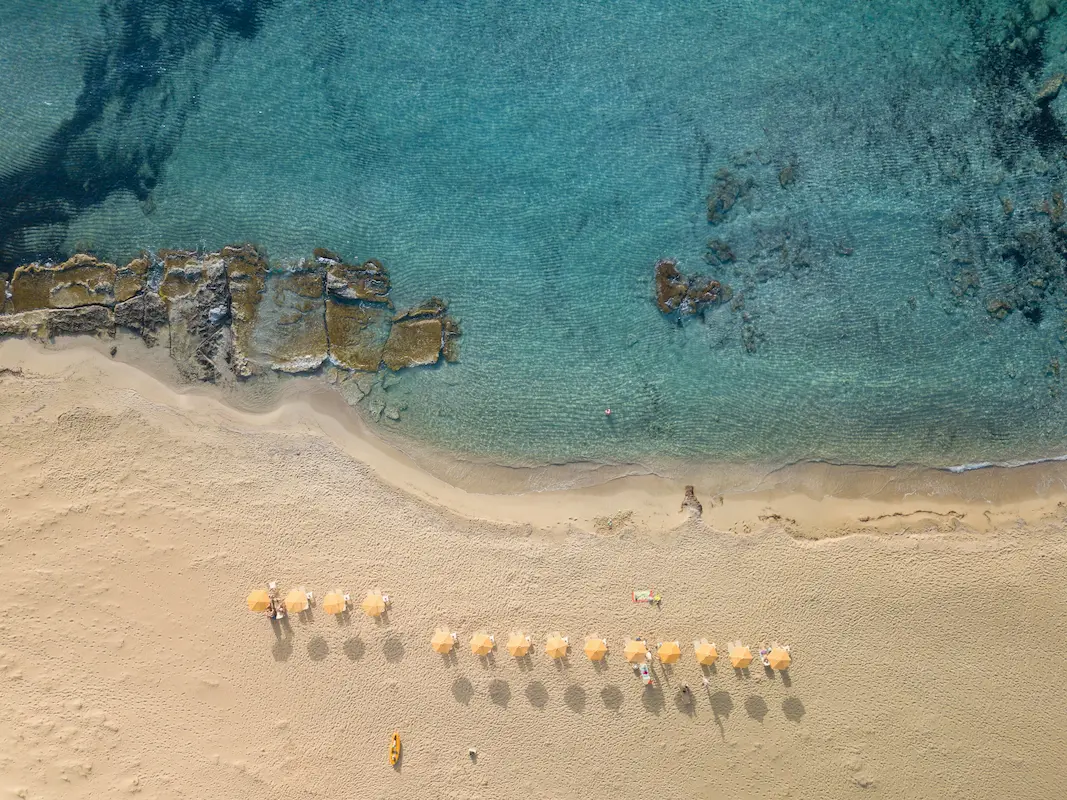
A Blue Flag is a small thing, a square of blue cloth on a pole, and it is the most reliable promise in Greece that a beach is clean, safe and properly kept. A remarkable amount of it flies in front of the stays we already know and love.
Which means that, for once, the question of where to swim and the question of where to stay can have the same answer.