Movies & Series Filmed in Greece, The Classics
Part one went down well. Almost too well, because half the replies were people telling us which films we’d left out, and nearly all of them were older than anything we’d picked. They had a point. Long before the blockbusters and the box sets, a first wave of films taught the world to watch Greece and fall in love with it. So back by popular demand, here is part two, the classics that paved the way.
Some you will know by heart. Others you may have to track down. All of them were shot somewhere we can take you.
James Bond - For Your Eyes Only (1981)
Filming Location: Holy Trinity Meteora & Corfu
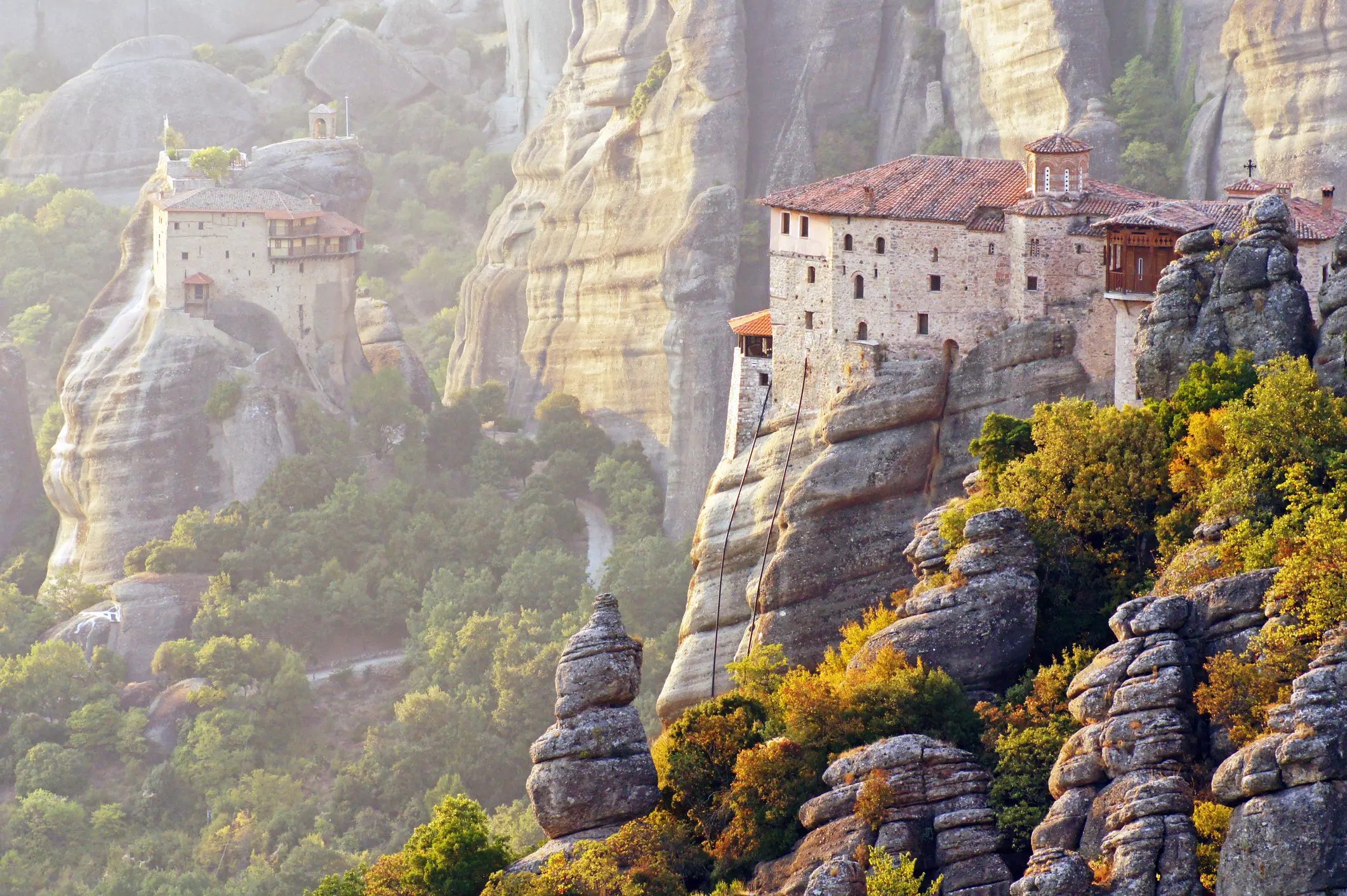
Meteora is one of the strangest sights in Greece: sandstone pillars rising straight off the Thessalian plain, with monasteries built on top in the fourteenth century, when the only way up was a rope and a basket. The most remote of them, the Holy Trinity, is where Bond climbs in the finale, standing in for the fictional St Cyril’s. The film reaches it after a spell on Corfu, at the Achilleion Palace above Gastouri, with Corfu Town gamely playing Albania.
The monks were not pleased to see them. They hung their washing over the walls to spoil the shots, so the crew built a fake monastery on the next pillar and filmed the interiors there. The exteriors, a Greek court ruled, belonged to the mountain and not the church.
Where to stay: Base yourself at the wonderful Grand Forest Metsovo or Elix Mar-Bella and visit Meteora as a day trip. Other fabulous activities can be planned from both hotels to experience a different side of Greece.
Boy on a Dolphin (1957)
Filming Location: Hydra Island
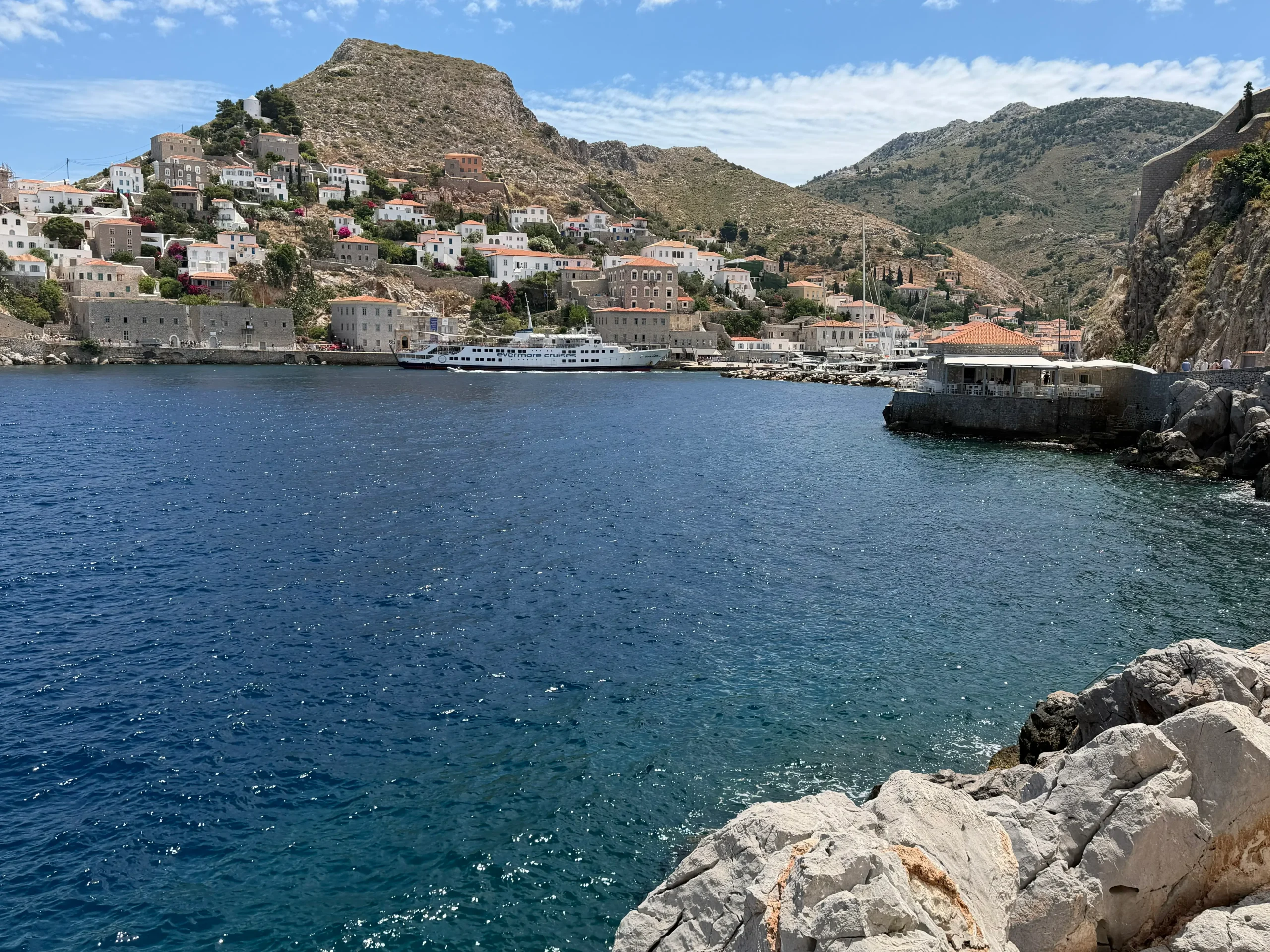
This is where it started. The first Hollywood film ever shot in Greece brought a 22-year-old Sophia Loren to Hydra for her English-language debut, as a sponge diver who finds an ancient bronze on the seabed and sets off a tug-of-war over who keeps it. Loren spent thirty-nine days here and called it one of the most beautiful places in the world; there is still a windmill above the harbour marked as hers, and a small bronze by the port copying the one she pulls from the sea.
Hydra has barely changed since. Still no cars, still the stone houses in tiers, still the light Loren remembered. Seventy years on, it has had every chance to spoil itself and politely declined.
Where to stay: FOS Hydra; Bellaville for an island escape; Bratsera for anyone who loves a heritage property.
The Big Blue (1988)
Filming Location: Amorgos and Ios
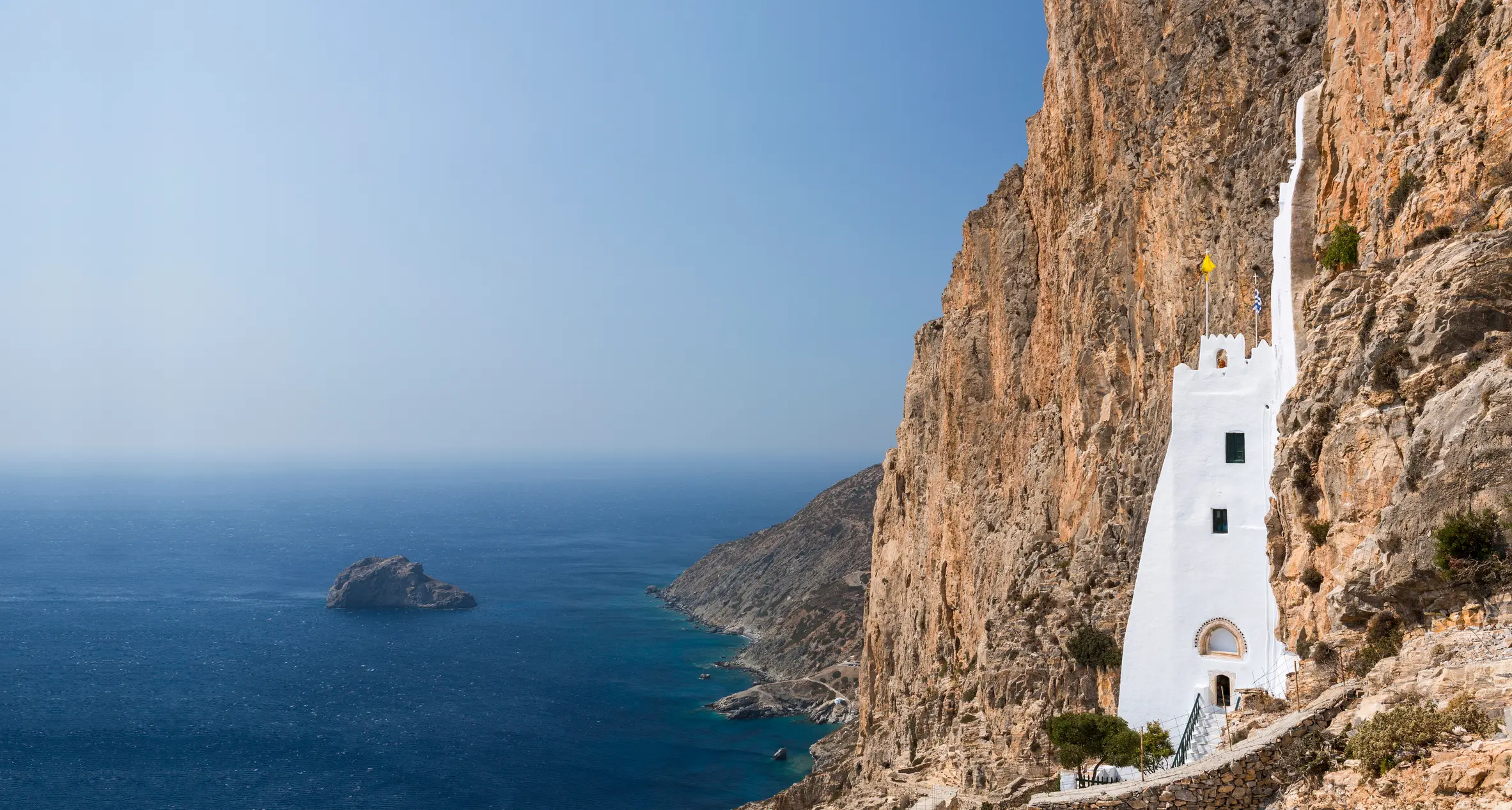
Amorgos is the easternmost of the Cyclades, narrow and steep and dropping almost straight into the sea. Just offshore the seabed falls to trenches seven hundred metres deep, which is why the water reads as that bottomless cobalt, and why Besson shot a film about free-divers here rather than anywhere shallower. It supplies the images too: the monastery of Panagia Hozoviotissa pressed eight storeys into a cliff, the cove at Agia Anna, the rusting Olympia wreck still sitting in Liveros Bay.
The Big Blue is barely a film and entirely a religion, at least in France, where a whole generation still quotes it at each other. The island earns the devotion; the ferries are long and Amorgos does not chase anyone, so everyone who makes it arrives rather pleased with themselves.
Where to Stay: Amorgina, the island’s new boutique arrival with vistas to the Big Blue; opens July 2026.
Mediterraneo (1991)
Filming Location: Kastellorizo Harbour
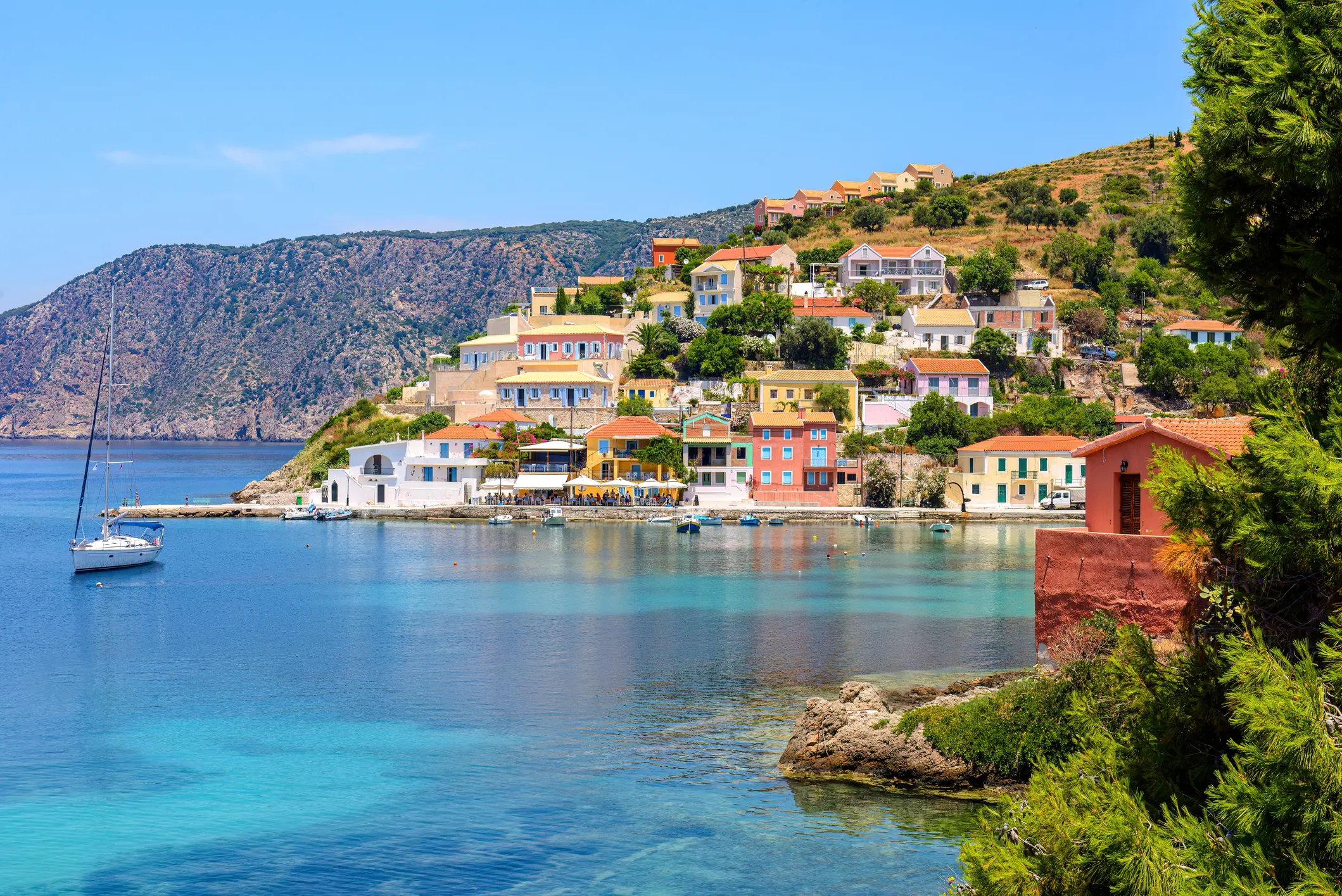
Kastellorizo is as far as Greece reaches, two kilometres off the Turkish coast and a long way from the rest of itself, a single horseshoe harbour ringed by tall houses in ochre and red. A unit of Italian soldiers is posted here in 1941 to occupy the place. The place occupies them instead; they forget the war, and the war returns the favour.
That is the entire plot, and it won the 1992 Academy Award for Best Foreign Language Film. Salvatores shot all of it on the island, harbour and square and the football match on the old airfield. Getting in takes a flight or a long ferry and some patience, which is the island’s way of choosing its guests.
Where to Stay: Mediterraneo for anyone seeking the authentic harbour experience, and Casa Mediterraneo for a more considered stay – both are excellent.
Never on Sunday (1960)
Filming locations: Piraeus and Athens
Jules Dassin shot this in Piraeus and made Melina Mercouri a global star overnight. She plays Ilya, a Piraeus prostitute living entirely on her own terms; the earnest American classicist who arrives to reform her has it backwards, of course. She civilises him. The theme, The Children of Piraeus, won the Academy Award for Best Original Song, the first foreign-language film to take it, and Mercouri won Best Actress at Cannes the same year.
She went on to become Greece’s Minister of Culture and spent years arguing for the return of the Parthenon Marbles. Few film stars leave that kind of second act.
Where to stay: Central Athens puts you about twenty minutes from Piraeus. We love Xenodocheio Milos, NOT Hotel, Monsieur Didot and Mona Athens. Then give an evening to Mikrolimano, the Piraeus bay that still has the rhythm the film caught and some of the best seafood around, with dinner at Yperokeanio, a proper old-school fish taverna.
Zorba the Greek (1964)
Filming Location: Stavros Beach, Crete
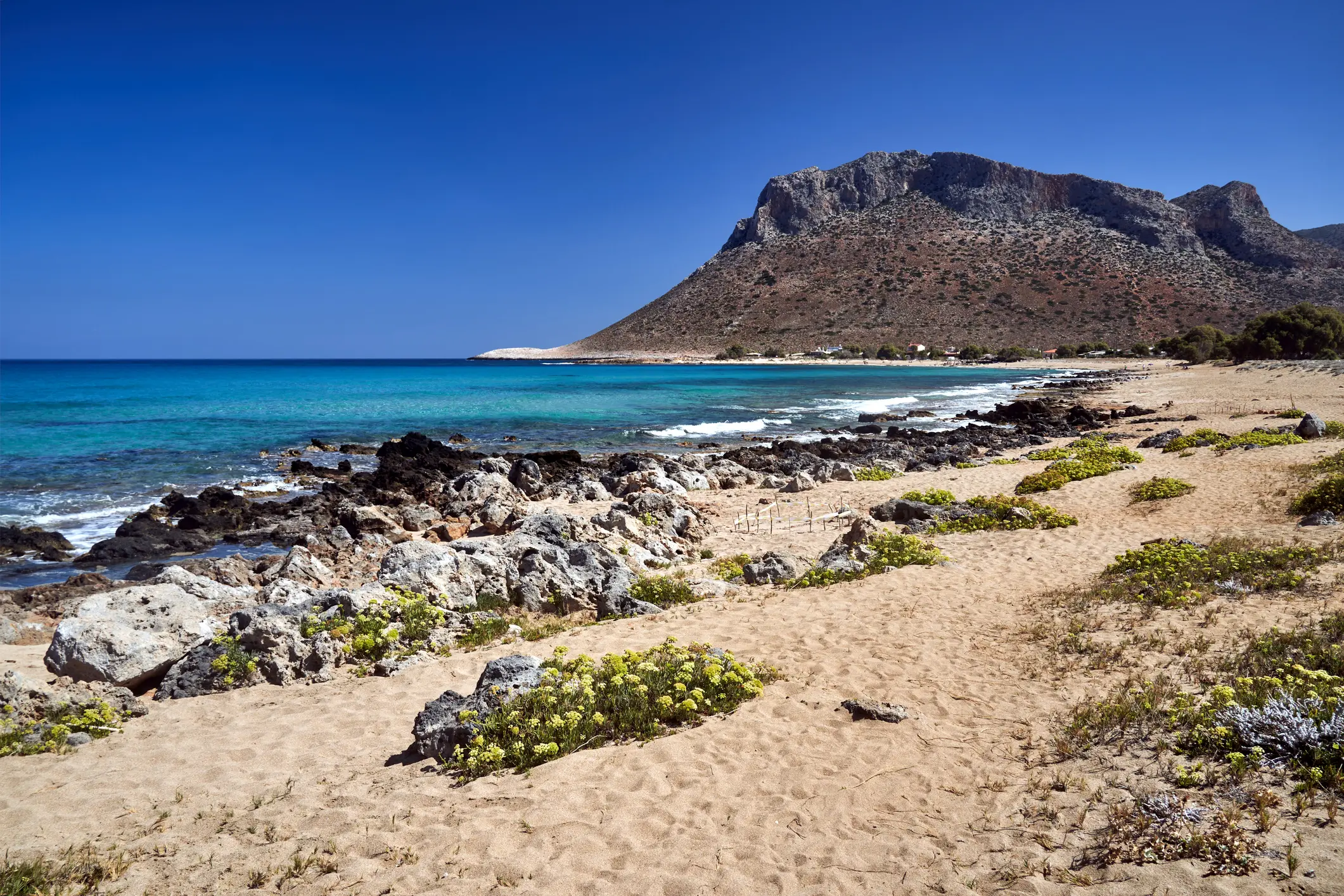
Anthony Quinn had already fallen for Greece on Rhodes; here he became Zorba, opposite Alan Bates as the buttoned-up Englishman who comes to run an inherited mine and leaves having learned how to live. Cacoyannis shot it in black and white around Chania, and the famous sirtaki, danced on the sand at Stavros Beach as everything collapses, closes it.
Theodorakis wrote the score, and the dance he invented for the film is now mistaken the world over for an ancient Greek tradition. It is not. It was made up in 1964, and it works anyway.
Where to Stay: Tella Thera near Stavros Beach or The Revery for a complete escape and access to some of Crete’s most gorgeous beaches.
For those who want to experience Chania’s old town: Aisha Boutique and The Tanneries are our picks. For families Domes Zeen Chania is wonderful.
The Guns of Navarone (1961)
Filming Locations: Lindos Acropolis, Rhodes
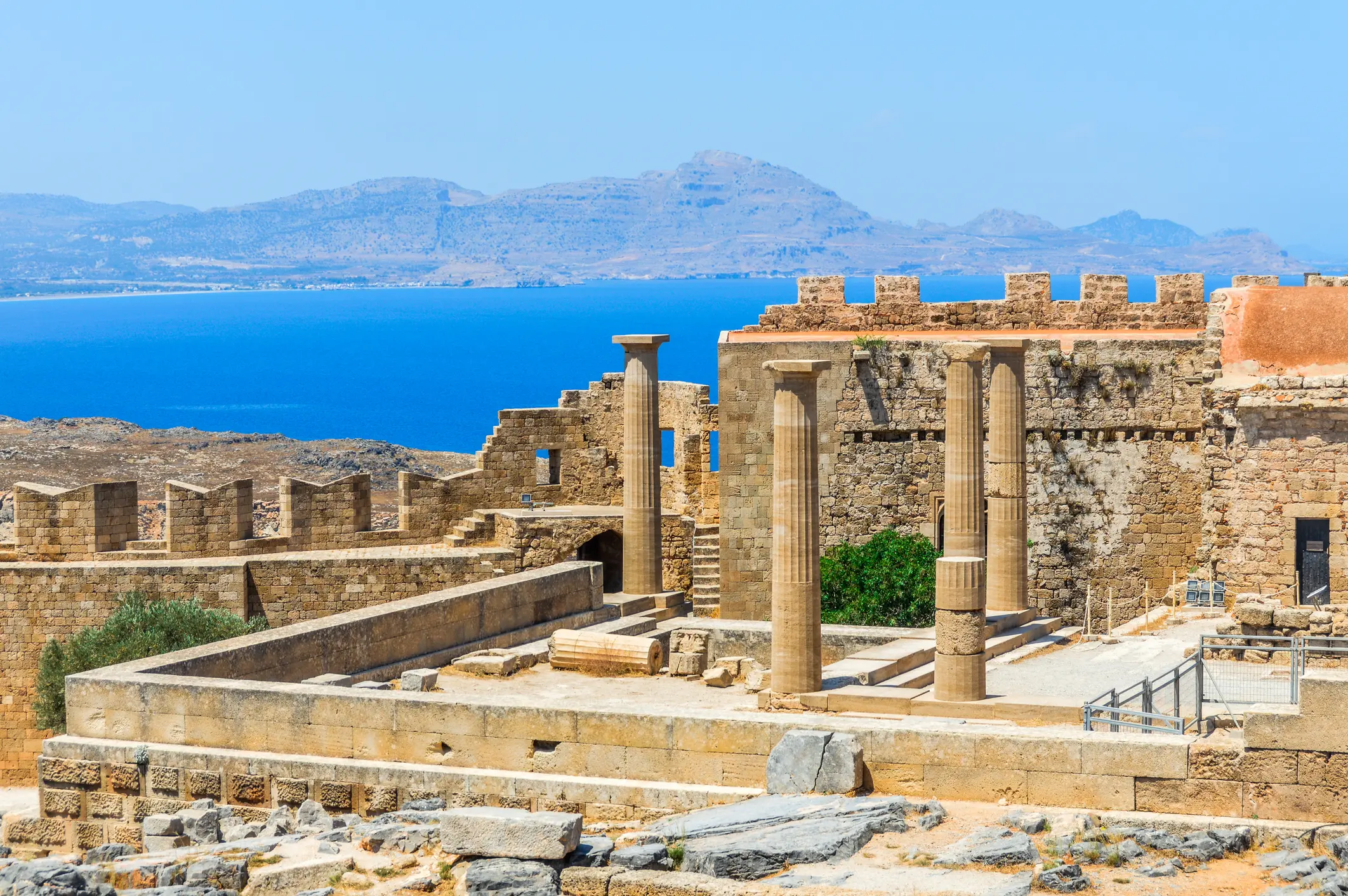
Rhodes is the largest of the Dodecanese, a walled medieval Old Town above beaches, vineyards and pine. The film worked it hard: the commandos land below the acropolis at Lindos, the Old Town supplies the fortress and the moat, and the cliffs of ‘Navarone’ do the menacing. Except those cliffs were a matte painting. The most fearsome thing in the film never existed, which did not stop it winning an Oscar for special effects.
Anthony Quinn loved the island enough to buy a bay here for an artists’ colony that never quite happened; the land was reclaimed, the name stuck anyway. Three years on he was dancing the sirtaki as Zorba. Rhodes started it.
Where to Stay: AMOH Luxury Collection is a 12 minute drive to Lindos and far enough away to esacpe the crowds.
For an authentic experience Menelos Art Boutique in the heart of Lindos
Dia Dyo Residence is a new-comer and one we’re excited about.
Tempest (1982)
Filming Locations: Cape Sounion and Athens
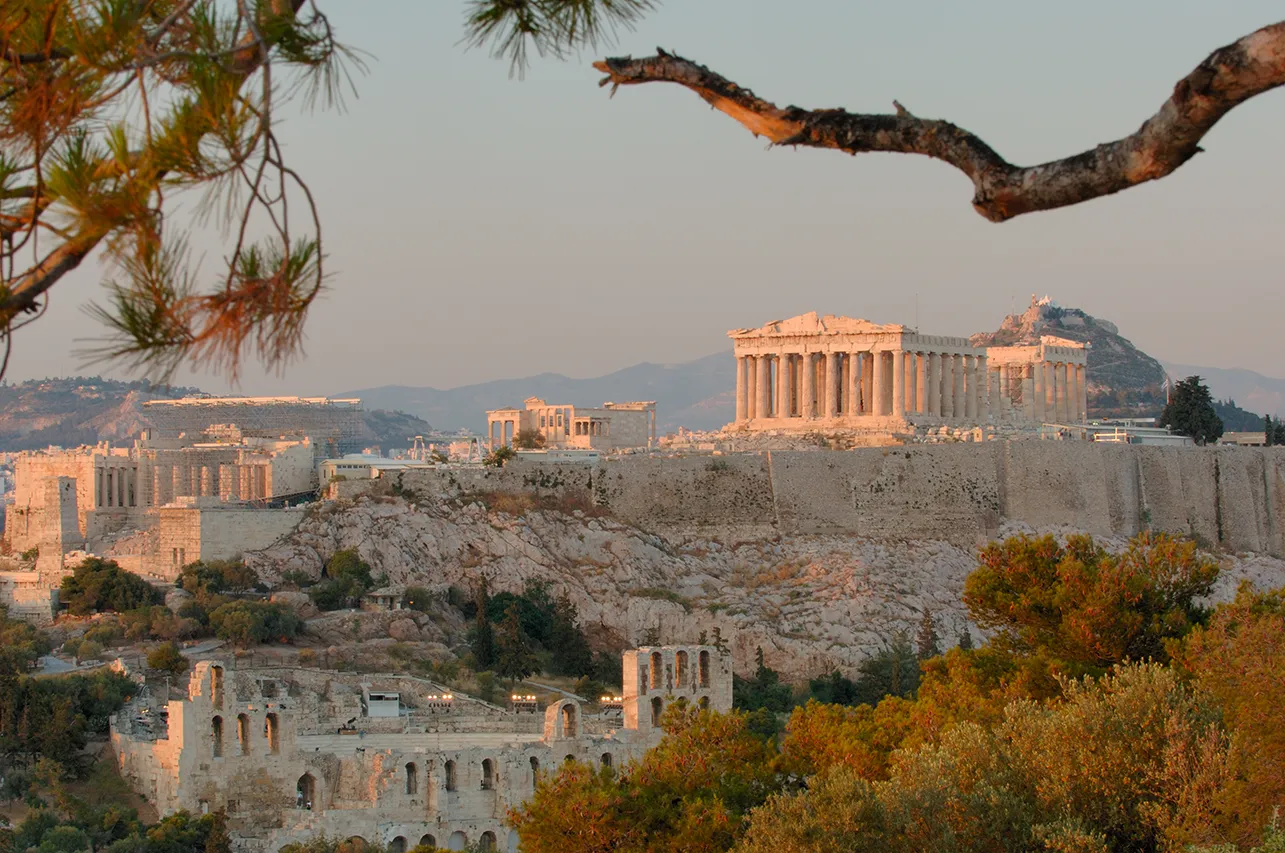
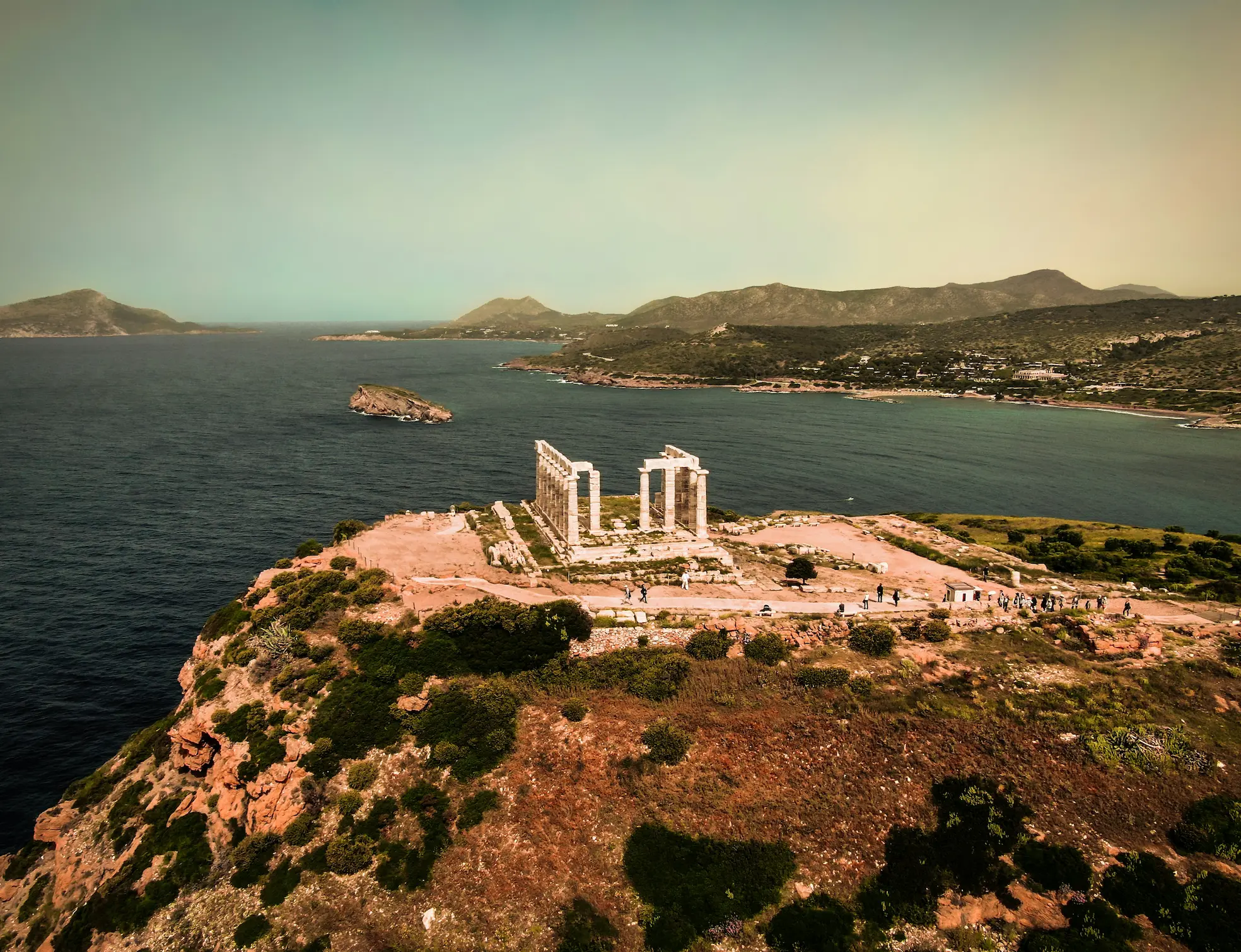
Cape Sounion is where Attica runs out. The Temple of Poseidon stands on the headland at the southern tip, fifth century BC, white marble going gold at sunset with the Aegean on three sides, an easy run down the coast road from Athens. It anchors Cassavetes’ loose, sprawling Tempest, with Gena Rowlands, Susan Sarandon, Raul Julia and a teenage Molly Ringwald in her first film, while the city does the rest: the Acropolis, Herodes Atticus, the lanes of Plaka and Anafiotika.
Sounion has been a postcard for two and a half thousand years. Byron carved his name into the marble here. He was, at least, in good company.
Where to Stay: Cape Sounio Grecotel has its own beach which sits under the Temple of Poseidon or stay Four Seasons Astir which is a 45 min drive away.
Summer Lovers (1982)
Filming Locations: Santorini
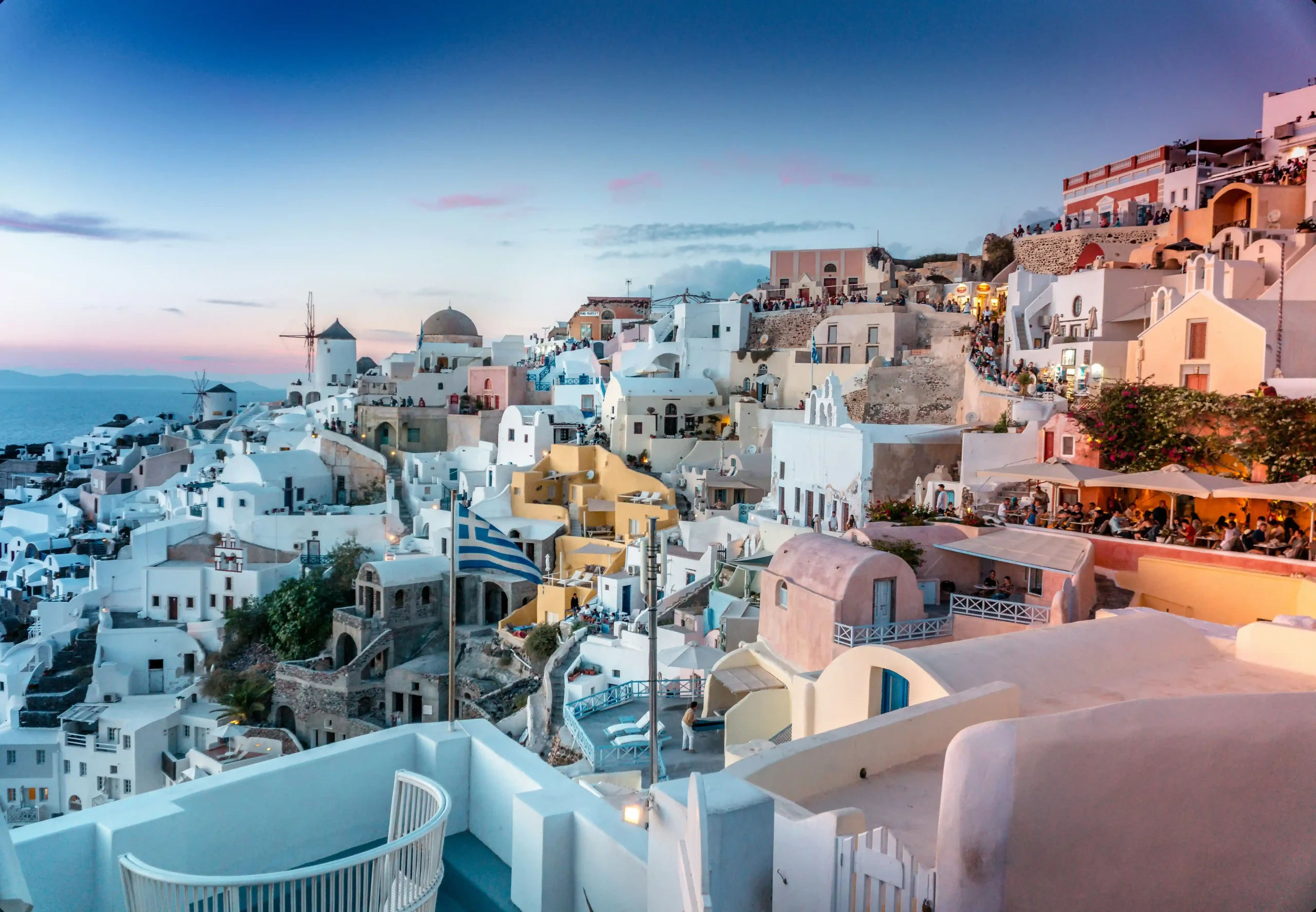
In 1982 Santorini was still farmers and fishermen rather than a honeymoon backdrop, and this is one of the films that started the shift. Kleiser chose it for the colours and little else: blue sea, white houses, three photogenic people moving between them. The couple rent a house in Oia, then the island’s least-visited village and now its most photographed.
The production also talked its way onto the live dig at Akrotiri, the Bronze Age town under the ash, where the actress playing the archaeologist promptly unearthed a real piece of 3,500-year-old pottery. Better work than most of the acting around it. The reviews were unkind and not wrong; watch it anyway, for the Santorini that existed before the rest of the world did.
Where to Stay: Any of the hotels on Santorini’s caldera, from Perivolas to Mystique and The Vasilicos.
Tell us who you’re travelling with and your personal hotel style & preference and we’ll pair you with the right recommendation.
If a scene stayed with you, tell us where. We’ll build the trip around it.